Clinician time reclaimed
Ambient documentation and inbox automation give clinicians back one to two hours per day, cutting after-hours charting and easing burnout across primary care and specialty practices.
Xpiderz is a senior healthcare AI development company helping hospitals, payers, and life-sciences teams ship clinical NLP, HIPAA-compliant AI assistants, EHR-integrated decision support, and care-team workflow automation, built on your clinical data, tuned to your guidelines, and engineered for safety, evidence, and measurable outcomes.
Health systems are racing to deploy AI for clinical documentation, diagnostic support, prior authorization, and patient engagement, yet most pilots stall before they ever touch a real patient encounter. HIPAA and HITRUST controls block off-the-shelf LLMs, EHR fragmentation across Epic, Cerner, athenahealth, and Meditech makes clean data access painful, evidence and validation requirements demand rigorous evaluation beyond a demo, and clinician trust collapses when AI hallucinates dosages or misses context. Xpiderz closes this gap with senior healthcare AI development services engineered for safety, compliance, and clinical workflow fit, combining clinical NLP, retrieval-augmented LLM design, EHR integration through HL7 and FHIR, and HIPAA-by-design infrastructure, with every model validated against clinician-reviewed benchmarks, instrumented for monitoring, and tuned to the operational realities of care delivery.
As a senior healthcare AI development company, we engineer clinical and operational AI on top of medical-grade NLP, validated LLMs, retrieval pipelines, and HIPAA-by-design infrastructure, with deep expertise in EHR integration, evidence generation, and care-team workflow fit across hospitals, clinics, payers, and life-sciences teams.
Production-grade clinical AI built on medical NLP, validated LLMs, and retrieval pipelines tuned to ICD-10, SNOMED CT, RxNorm, and LOINC, powering ambient documentation, diagnostic support, and decision tools that clinicians actually trust at the bedside.
Clinical NLP and Medical Coding
Extract structured findings, problems, medications, and codes from clinical notes, discharge summaries, and pathology reports with NLP tuned to ICD-10, SNOMED CT, and RxNorm.
Ambient Clinical Documentation
Capture clinician-patient conversations and generate compliant SOAP notes, problem lists, and orders that flow directly into the EHR, cutting after-hours charting and clinician burnout.
Diagnostic Imaging Support
Computer-vision models that flag findings on X-ray, CT, MRI, and pathology slides, prioritize worklists, and surface measurements to accelerate radiology reads and reduce miss rates.
Patient Engagement AI
HIPAA-compliant chat and voice assistants for scheduling, intake, symptom triage, medication adherence, and post-discharge follow-up, available 24/7 across web, SMS, and phone.
Automate the revenue cycle, prior authorization, claims, and population-health workflows with AI that reads payer policies, extracts evidence from the chart, predicts denials, and stratifies risk so operations and care-management teams can focus where it matters.
Prior Auth and Claims Automation
LLM agents that read payer rules, assemble clinical evidence from the EHR, draft prior-authorization packets, and flag likely denials before submission, reducing rework and accelerating approvals.
Predictive Risk Stratification
Risk models that identify readmission, sepsis, no-show, and rising-risk populations using EHR, claims, and SDoH signals, routing cohorts to care managers with explainable rationale.
Our healthcare AI development process moves your initiative from idea to validated production through six structured stages tuned for clinical accuracy, HIPAA-grade governance, and measurable patient and operational outcomes.
Why health systems, payers, and life-sciences teams invest in custom healthcare AI development, and the measurable outcomes Xpiderz delivers across clinical, operational, and financial workflows.
Ambient documentation and inbox automation give clinicians back one to two hours per day, cutting after-hours charting and easing burnout across primary care and specialty practices.
Imaging and clinical decision support flag urgent findings, prioritize worklists, and surface evidence at the point of care, shortening time to diagnosis without adding clinician overhead.
Prior-auth and coding AI assemble evidence, predict denials, and route clean claims, recovering revenue that would otherwise leak through rework cycles and write-offs.
Always-on scheduling, intake, triage, and post-discharge follow-up across web, SMS, and voice, with empathetic, plain-language responses tuned to your service lines.
Private deployments, BAAs, customer-managed keys, PII and PHI redaction, audit logging, and HITRUST and SOC 2 alignment engineered in from day one, not retrofitted.
Every model is validated against clinician-reviewed benchmarks, instrumented for performance, and tied to outcome metrics, so leaders can defend deployments to clinicians, boards, and regulators.
Senior engineers, clinical depth, and zero lock-in. Every healthcare AI system we ship is engineered for clinical accuracy, HIPAA-grade governance, and measurable patient and operational outcomes from day one.
We build on real clinical informatics, medical NLP, fine-tuning, and high-throughput inference, not stitched-together blog posts. Every architecture is tuned to your care pathways, data, and safety targets so it holds up under real clinical traffic.
Across hospitals, clinics, payers, pharma, and digital health, every system shipped with clinician adoption, tracked accuracy, and measurable ROI.
Built on the same compliant fine-tuning and serving stack as the final product, so there is no rewrite from POC to validated scale.
We embed AI directly into the EHR, claims, and care platforms your teams already use.
Private deployments, customer-managed keys, PHI redaction, audit trails, and red-team testing aligned with HIPAA, HITECH, GDPR, SOC 2, and FDA SaMD.
You own the models, prompts, and patient-derived insights forever, with no per-seat licensing or vendor lock-in on your clinical data.
From hospitals and pharma to telehealth and public health, we ship domain-tuned healthcare AI that resolves real clinical, operational, and member workflows for regulated teams.
Ambient scribing, deterioration prediction, and discharge automation embedded in Epic and Cerner for inpatient and emergency teams.
Intake assistants, smart scheduling, and prior-auth automation that reclaim clinician time across primary care and specialty practices.
Trial recruitment, literature review, and drug-discovery copilots that compress research cycles for medical affairs and R and D.
On-device and cloud AI for monitoring, imaging, and clinical decision support with FDA SaMD pathways engineered from day one.
Symptom triage, care navigation, and voice scribing that scale clinician capacity across virtual-first and hybrid care platforms.
Claims AI, risk adjustment, and member assistants that cut admin cost and improve member experience across commercial and government lines.
CBT copilots, risk screening, and care-coordination tooling with strict safety guardrails and clinical escalation paths built in.
Outbreak modeling, population-health analytics, and trial analytics for agencies, academic centers, and research consortia.
Let's scope your healthcare AI initiative and identify the fastest compliant path from prototype to validated production deployment.
Schedule a CallMulti-tenant AI voice-calling platform automating seller prospecting for Australian real-estate agencies.
AI-powered marketing analytics platform that reduced reporting time by 90% and doubled client capacity.
Full-spectrum market intelligence platform monitoring competitive signals across six data dimensions.
AI-powered personal research assistant for Master's and PhD students.
Conversational AI solution automating customer engagement through WhatsApp in the UAE market.
AI-powered legal consultation platform democratizing access to affordable legal guidance.
The world's first AI platform for legislative drafting and policy research.
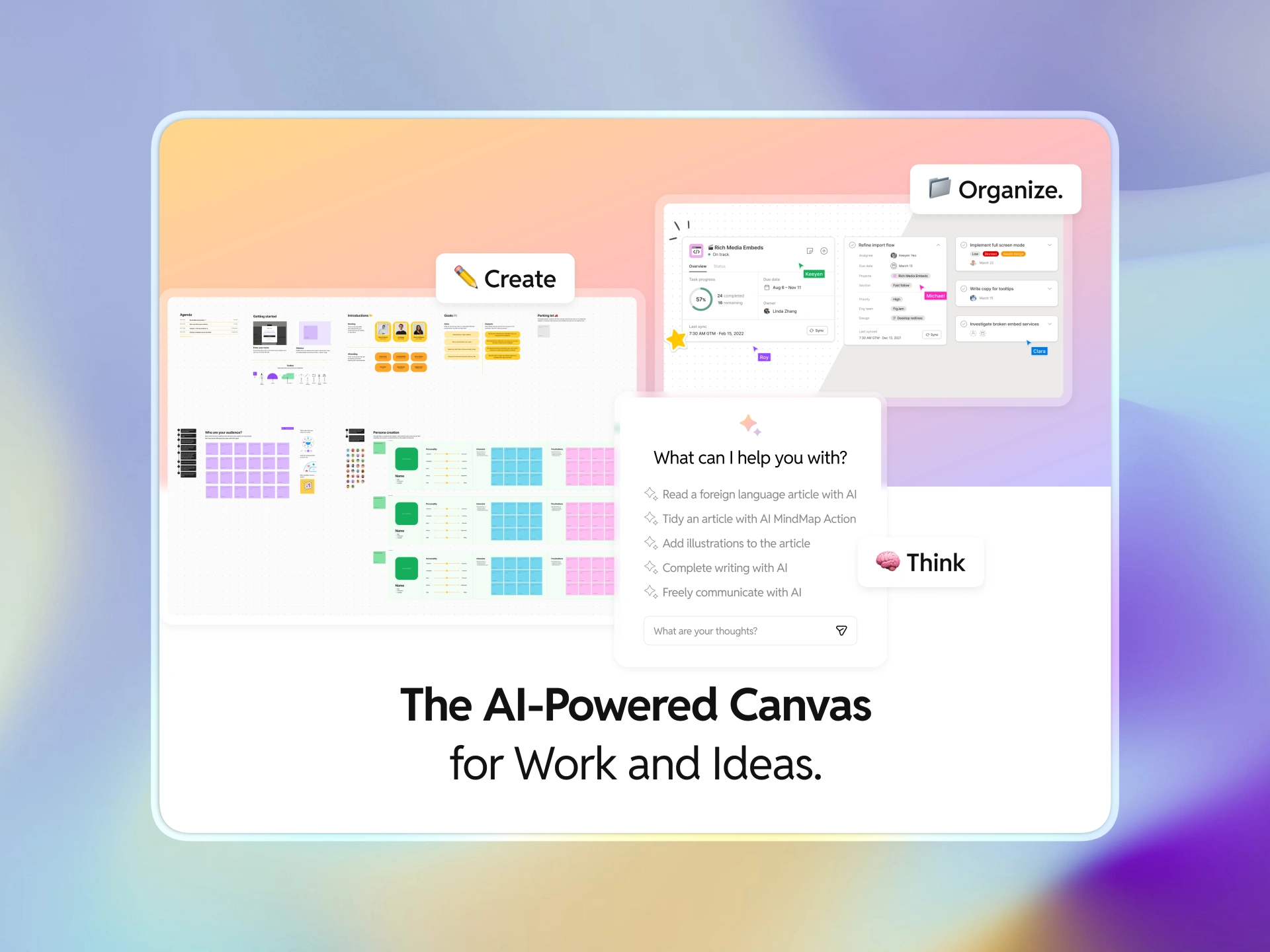
Product marketing deck for YaseenAI's Hive — the AI-powered canvas for work and ideas.
Clear answers on scope, cost, compliance, and how production-grade healthcare AI development services actually work.
Yes, healthcare AI development engineers clinical and operational AI that reads the chart, follows guidelines, integrates with the EHR, and supports clinicians or patients end-to-end, converting documentation, diagnostic, and admin burden into safer care and measurable financial impact.
It depends on risk and workflow depth. Generic LLMs work for low-risk internal tasks like summarizing public guidelines. Purpose-built healthcare AI, grounded in your chart, validated against clinician-reviewed benchmarks, and wrapped in HIPAA-aligned infrastructure, is required for any patient-facing, billing, or clinical-decision use case.
Yes, we integrate with Epic, Oracle Cerner, athenahealth, Meditech, eClinicalWorks, and others via FHIR, HL7v2, SMART on FHIR, CDS Hooks, and vendor app stores like the Epic App Orchard and Cerner Code, preserving SSO, audit trails, and role-based access from day one.
No, a production-grade healthcare AI deployment does not require a multi-million-dollar budget. Validated pilots typically start at $40K and full enterprise platforms scale to $400K+, scoped to clinical risk, data complexity, EHR integration depth, and compliance requirements.
Working prototypes ship in 3 to 5 weeks. Validated production deployments reach live clinical or operational use within a single quarter, with weekly clinician demos, formal evaluation against benchmarks, and a real go-live date committed during scoping.
Yes, every Xpiderz healthcare AI deployment is engineered to HIPAA, HITRUST, and SOC 2 standards with executed BAAs, private cloud or on-prem deployments, customer-managed keys, PHI redaction, audit logging, and EU AI Act alignment where relevant.
Yes, every project is instrumented from day one with clinical and operational KPIs like clinician time saved, time to diagnosis, denial rate, readmissions, no-show rate, CSAT, and revenue impact, so ROI is observable in dashboards rather than anecdotal.
Yes, you own everything we build, including model fine-tunes, prompts, retrieval indexes, evaluation suites, integration code, and infrastructure. No vendor lock-in, no per-seat licensing, and no royalty on the work we deliver.
We work natively with FHIR R4 and R5, HL7v2, CDA, DICOM, X12, NCPDP, USCDI, OMOP, and code systems including ICD-10, CPT, HCPCS, SNOMED CT, RxNorm, LOINC, and NDC, so models speak the same language as your downstream systems and registries.
Book a free discovery call to align on goals, receive a fixed-fee proposal within 48 hours, and a senior engineering pod paired with a clinical informaticist kicks off within one to two weeks. No account-manager handoffs, no offshore subcontracting.