Real-time visual intelligence
See what is happening across cameras, lines, and sites the moment it occurs, with millisecond-level detection that turns raw video into immediate operational signal.
Xpiderz is a senior computer vision development company helping enterprises ship custom object detection, OCR and document AI, video analytics, visual inspection, and edge deployment solutions, engineered on your image and video data, tuned to your operational targets, and built for production-grade accuracy, latency, and measurable business impact.
Enterprises capture millions of images and hours of video every day, yet most of that visual data sits unused in storage, untagged, unsearched, and unmonetized. Manual inspection bottlenecks, brittle rule-based vision pipelines, slow OCR tools, and prototypes that never reach production stall real adoption, while delivering accurate, low-latency, and compliant vision systems at scale remains a persistent challenge. We bridge this gap through enterprise-focused computer vision development services built for secure, scalable, and business-aligned implementation, combining custom model training, dataset engineering, MLOps, and edge or cloud deployment aligned with your hardware and data ecosystem, with every vision system engineered for accuracy, observability, and continuous optimization.
As a senior computer vision development company, we draw on deep expertise across deep learning, dataset engineering, model optimization, and edge deployment to ship production-grade vision systems that detect, classify, read, and act on visual data at scale.
Real-time detection and multi-object tracking built on YOLOv8, RT-DETR, and Detectron2 with custom heads for your classes, optimized to sub-20ms inference for surveillance, retail analytics, traffic monitoring, and autonomous workflows.
OCR and Document AI
Extract structured fields from invoices, IDs, receipts, contracts, and handwritten forms using PaddleOCR, Tesseract, and custom layout-aware document understanding models.
Video Analytics and Action Recognition
Process live and recorded video for action recognition, anomaly detection, crowd counting, and event triggering using temporal CNNs and video transformers.
Image Classification and Segmentation
High-accuracy classification and pixel-level segmentation built on EfficientNet, ConvNeXt, Vision Transformers, and Mask R-CNN, trained on your labeled data for defect, medical, or product categorization.
Visual Search and Similarity
Image embedding pipelines with CLIP, DINOv2, and custom encoders that power visual search, duplicate detection, and recommendation across product catalogs and media libraries.
Optimize and deploy vision models on NVIDIA Jetson, Raspberry Pi, Hailo, mobile, and embedded devices using TensorRT, ONNX Runtime, OpenVINO, and CoreML for real-time inference without cloud dependency.
Our computer vision development process moves your initiative from idea to production through four structured stages: discovery and data strategy, model training and optimization, integration and edge deployment, and continuous monitoring, engineered by senior vision engineers for accurate, low-latency, and measurable outcomes.
Every engagement begins with a two-week discovery sprint where senior Xpiderz engineers and your stakeholders audit existing imagery, define target classes, and design the data collection and annotation strategy. We translate vague visual ambition into a scoped, deliverable computer vision roadmap with fixed timelines, accuracy targets, and clear hardware constraints.
Our engineers build the datasets, augmentation pipelines, and model architectures that underpin enterprise-grade vision systems. We select the right backbone and head for your workload, train on mixed-precision GPU clusters with PyTorch Lightning, and apply pruning, quantization, and distillation to meet your accuracy, cost, and latency targets.
We integrate vision models into your existing cameras, line-of-business systems, and edge fleets with SSO, role-based access, audit trails, and zero-disruption rollouts. Every deployment is engineered for production scale with REST APIs, gRPC streaming, edge containers, fallback paths, and field validation before launch.
Enterprise vision systems require continuous monitoring to maintain accuracy under shifting lighting, hardware, and operational conditions. Xpiderz implements monitoring dashboards, drift detection, and human-in-the-loop review workflows that catch performance regressions early and feed corrections back into retraining cycles.
Why enterprises invest in custom computer vision development, and the measurable outcomes Xpiderz delivers across manufacturing, retail, logistics, and regulated industries.
See what is happening across cameras, lines, and sites the moment it occurs, with millisecond-level detection that turns raw video into immediate operational signal.
Replace manual visual QA and audit work with automated vision pipelines that scale across shifts and sites, with most clients seeing payback within two quarters.
Detect defects, contamination, and anomalies that humans miss under fatigue, lifting first-pass yield and shrinking warranty and recall exposure.
OCR and document AI extract structured data from invoices, IDs, and forms with high accuracy, eliminating manual keying and accelerating downstream automation.
One model fleet, many endpoints. Roll out the same vision pipeline across hundreds of cameras and locations with centralized monitoring and versioning.
Run inference on-device with TensorRT, ONNX, and OpenVINO, eliminating cloud round-trips, protecting sensitive imagery, and operating reliably in low-connectivity environments.
We build vision systems on top of modern deep learning, custom training, and rigorous evaluation, not off-the-shelf APIs. Every architecture is tuned for your imagery, hardware, and operational targets, so accuracy and latency hold up under real production load.
We do not stop at proofs of concept. Xpiderz has shipped vision systems into live production across manufacturing, retail, logistics, security, and medical workflows, with measurable accuracy gains, real cameras, and tracked ROI.
Security, governance, and compliance are baked in from day one. We design to HIPAA, GDPR, SOC 2, and EU AI Act standards with on-premise and edge deployments, customer-managed keys, PII redaction, and full audit trails.
Working prototypes in 2 to 4 weeks, production deployments within a single quarter. Every prototype is built on the same architecture as the final product, so there is no rewrite from POC to scale.
No vendor lock-in. We architect on PyTorch, TensorFlow, ONNX, TensorRT, OpenVINO, CoreML, and open-source models on your own infrastructure, choosing the right framework for each workload and swapping as better options ship.
Our computer vision systems detect surface defects, missing components, and assembly errors on the line, lifting first-pass yield and shrinking scrap, rework, and warranty cost.
HIPAA-aware medical imaging models for radiology triage, pathology slide analysis, dermatology screening, and clinical documentation, supporting clinicians with accurate, auditable second opinions.
Virtual try-on, visual search, planogram compliance, self-checkout, and loss-prevention vision pipelines that lift conversion and protect margin across stores and digital storefronts.
Parcel dimensioning, barcode and label OCR, damage detection, dock door analytics, and pallet counting that streamline warehouse throughput and reduce manual scanning load.
Document AI for KYC, ID verification, check capture, and contract parsing, with structured extraction that accelerates onboarding and reduces manual review across regulated workflows.
Vehicle and property damage assessment from claimant photos, first-notice-of-loss image intake, and document OCR that speed claim cycle time and tighten fraud controls.
ADAS and autonomy support, driver-monitoring systems, license-plate recognition, and in-cabin analytics built for safety-critical real-time performance on embedded hardware.
Intrusion detection, weapon and PPE compliance, person re-identification, and crowd analytics that turn passive camera feeds into proactive, alert-driven safety systems.
Site safety monitoring, progress tracking from drone and time-lapse imagery, and automated floorplan extraction that improve schedule visibility and reduce safety incidents.
Crop health monitoring from drone and satellite imagery, weed and pest detection, livestock tracking, and yield prediction models that lift output and reduce input cost.
Automated tagging, scene detection, content moderation, deepfake detection, and visual search across video libraries that accelerate production and protect platform integrity.
Proctoring and engagement analytics, microscopy and lab imaging, and document digitization that support remote learning and accelerate scientific discovery.
Let's scope your computer vision project and identify the fastest path from prototype to production deployment on cloud or edge.
Schedule a CallMulti-tenant AI voice-calling platform automating seller prospecting for Australian real-estate agencies.
AI-powered marketing analytics platform that reduced reporting time by 90% and doubled client capacity.
Full-spectrum market intelligence platform monitoring competitive signals across six data dimensions.
AI-powered personal research assistant for Master's and PhD students.
Conversational AI solution automating customer engagement through WhatsApp in the UAE market.
AI-powered legal consultation platform democratizing access to affordable legal guidance.
The world's first AI platform for legislative drafting and policy research.
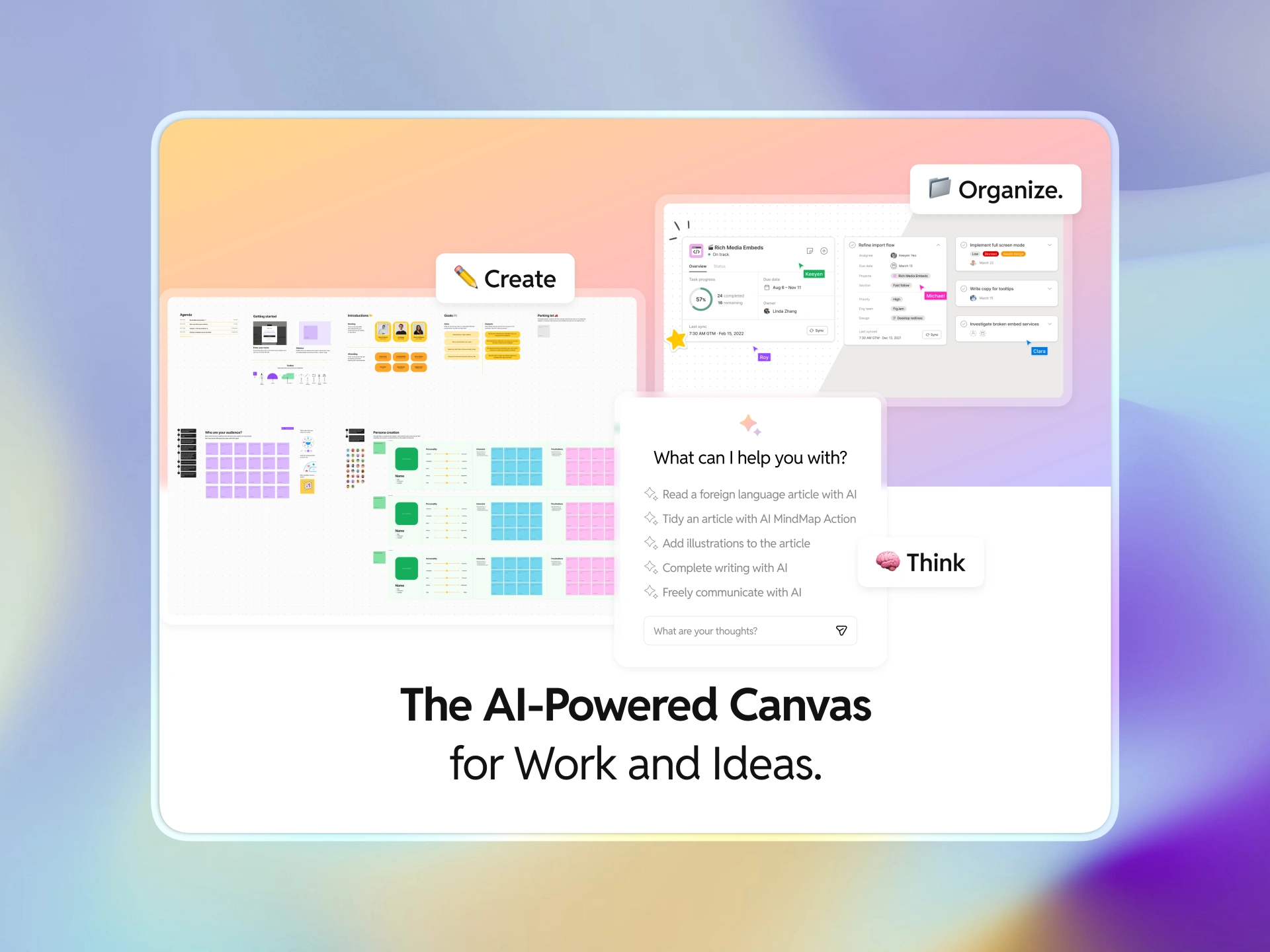
Product marketing deck for YaseenAI's Hive — the AI-powered canvas for work and ideas.
Clear answers on scope, cost, compliance, and how production-grade computer vision development services actually work.
Computer vision development engineers AI systems that detect, classify, segment, track, and read content in images and video, turning unstructured visual data into structured signals your business systems can act on for inspection, automation, safety, and customer experience with measurable accuracy and ROI.
It depends on how unique your visual domain is. Pre-trained models work well for generic objects, text, and faces. Custom training is essential for proprietary defects, niche products, medical imagery, or specialized environments. Most enterprise deployments are hybrid: pre-trained backbones with custom heads fine-tuned on your labeled data.
Yes, we integrate with existing IP cameras, RTSP streams, industrial vision cameras, mobile devices, and edge appliances, and connect outputs into MES, ERP, WMS, PACS, and custom back-ends via REST, gRPC, MQTT, and webhooks. No rip-and-replace, and we preserve SSO, RBAC, and audit trails from day one.
No, a production-grade computer vision system does not require a huge budget. Pilots typically start at $25K and full enterprise deployments scale to $250K+, scoped to camera count, class complexity, annotation volume, hardware targets, and compliance requirements.
Working prototypes ship in 3 to 6 weeks. Full multi-site deployments reach production within a single quarter, with weekly demos against working software and a real go-live date committed during scoping.
Yes, we design to HIPAA, GDPR, SOC 2, and EU AI Act standards with on-premise and edge deployments, customer-managed keys, PII and face redaction, model audit trails, and data-residency controls baked in from day one for medical, financial, and safety-critical use cases.
Every vision system is instrumented from day one with KPIs like detection precision and recall, false-positive rate, throughput per camera, defect-rate reduction, labor hours saved, and revenue lift, so ROI is observable in dashboards rather than anecdotal.
Yes, you own everything we build, including trained model weights, training datasets, annotation guidelines, evaluation suites, inference code, and deployment infrastructure. No vendor lock-in and no per-camera licensing on the work we deliver.
PyTorch, TensorFlow, ONNX Runtime, TensorRT, OpenVINO, CoreML, and MediaPipe deployed across NVIDIA Jetson, Hailo, Google Coral, Raspberry Pi, iOS, Android, browser WebGPU, and standard x86 servers, plus cloud GPU on AWS, Azure, and GCP.
Book a free discovery call to align on goals, receive a fixed-fee proposal within 48 hours, and a senior engineering pod kicks off within one to two weeks. No account-manager handoffs, no offshore subcontracting.