Grounded accuracy
Every answer is anchored in retrieved passages from your live knowledge base, so the LLM responds with information that actually exists in your source of truth, not generic web data.
Xpiderz is a senior RAG development company helping enterprises ship production-grade retrieval augmented generation systems, with vector databases, hybrid search, custom retrieval pipelines, and enterprise knowledge bases engineered for grounded accuracy, citation, and measurable business impact.
Standalone large language models confidently produce hallucinated answers, lag months behind your latest documents, and have no traceable source for what they say, which makes them unfit for regulated industries, customer-facing assistants, and high-stakes internal workflows. Enterprises that depend on accurate, current, and citable knowledge cannot ship LLMs in isolation. Retrieval augmented generation closes this gap by grounding every model response in your live knowledge base, vector store, and structured data, so answers are anchored to real source documents and refreshed the moment your content changes. Xpiderz delivers production-grade RAG development services that combine vector database engineering, hybrid search, intelligent chunking, and rigorous evaluation, with every pipeline tuned for retrieval recall, answer faithfulness, citation quality, and the security guarantees regulated enterprises require to put AI in front of customers, employees, and auditors.
As a senior RAG development company, we engineer retrieval, vector storage, and generation pipelines that are tuned for grounded accuracy, citation quality, and production scale, with every system built to handle real enterprise documents, real query patterns, and real compliance constraints.
Hybrid retrieval pipelines combining dense vector similarity, BM25 keyword search, and cross-encoder reranking, with query rewriting, multi-hop reasoning, and intent-aware routing engineered to surface the most relevant passages for every question your users actually ask.
Vector Store Engineering
Production-grade vector storage on Pinecone, Weaviate, Qdrant, Milvus, or pgvector with namespace strategy, metadata filtering, hybrid indexes, and infrastructure sized to your corpus and traffic.
Knowledge Graph Augmentation
Entity extraction, relationship modeling, and graph-backed retrieval that complement vector search with structured reasoning across documents, products, people, and policies.
Chunking and Indexing Strategy
Semantic chunking, recursive document parsing, table and figure extraction, and parent child chunk relationships that preserve context, improve precision, and handle PDFs, HTML, and code.
Evaluation and Relevance Tuning
Continuous evaluation with RAGAS, DeepEval, and custom harnesses to measure retrieval recall, answer faithfulness, hallucination rate, and context relevance against ground-truth Q and A sets.
Citation generation, answer grounding checks, confidence scoring, and fallback handling, with every response traceable to its source passage so your team, your customers, and your auditors can verify exactly where each answer came from.
Our RAG development process moves your initiative from idea to production through four structured stages: knowledge audit, retrieval engineering, integration, and continuous tuning, delivered by senior RAG engineers focused on grounded accuracy, observable quality, and measurable business outcomes.
Every engagement begins with a structured audit of your document sources, content types, and target query patterns. Senior Xpiderz engineers catalog wikis, PDFs, databases, and SaaS systems, define the questions your RAG must answer, and curate a ground-truth evaluation set that anchors every downstream decision in measurable accuracy.
Our engineers build the ingestion, chunking, embedding, and retrieval layer, benchmarking embedding models, chunk sizes, hybrid search weights, and rerankers against your evaluation set. We tune for recall, precision, latency, and cost so the final pipeline matches your accuracy bar without overspending on inference.
We wire the RAG system into your CRMs, knowledge bases, ticketing tools, and product surfaces with SSO, role-based access, audit trails, and zero-disruption rollouts. Every deployment ships with streaming responses, caching, fallback paths, and red-team testing so it lands in production ready for real traffic from day one.
RAG systems decay as content, language, and user behavior shift. Xpiderz instruments retrieval quality, answer faithfulness, and citation accuracy, then runs human-in-the-loop review and offline regression tests so your RAG stays accurate, current, and trustworthy as your knowledge base evolves.
Why enterprises invest in custom retrieval augmented generation, and the measurable outcomes Xpiderz delivers across knowledge work, customer support, and regulated decision-making.
Every answer is anchored in retrieved passages from your live knowledge base, so the LLM responds with information that actually exists in your source of truth, not generic web data.
When a policy, product spec, or contract changes, the new content flows through ingestion and is searchable within minutes, no waiting on model retraining cycles.
Retrieval constraints, grounding checks, and confidence thresholds drive measurable reductions in fabricated answers, with hallucination rates typically falling by 60 to 90 percent versus standalone LLMs.
Every response links back to its source document and passage, giving compliance, legal, and audit teams the traceability they need to deploy AI in regulated workflows with confidence.
RAG sidesteps the cost, complexity, and rigidity of repeated fine-tuning, you update the index instead of the weights, which typically reduces total ownership cost by a factor of five to ten.
Content owners publish directly to source systems and the RAG pipeline picks up changes through incremental indexing, so subject-matter experts stay in control without engineering bottlenecks.
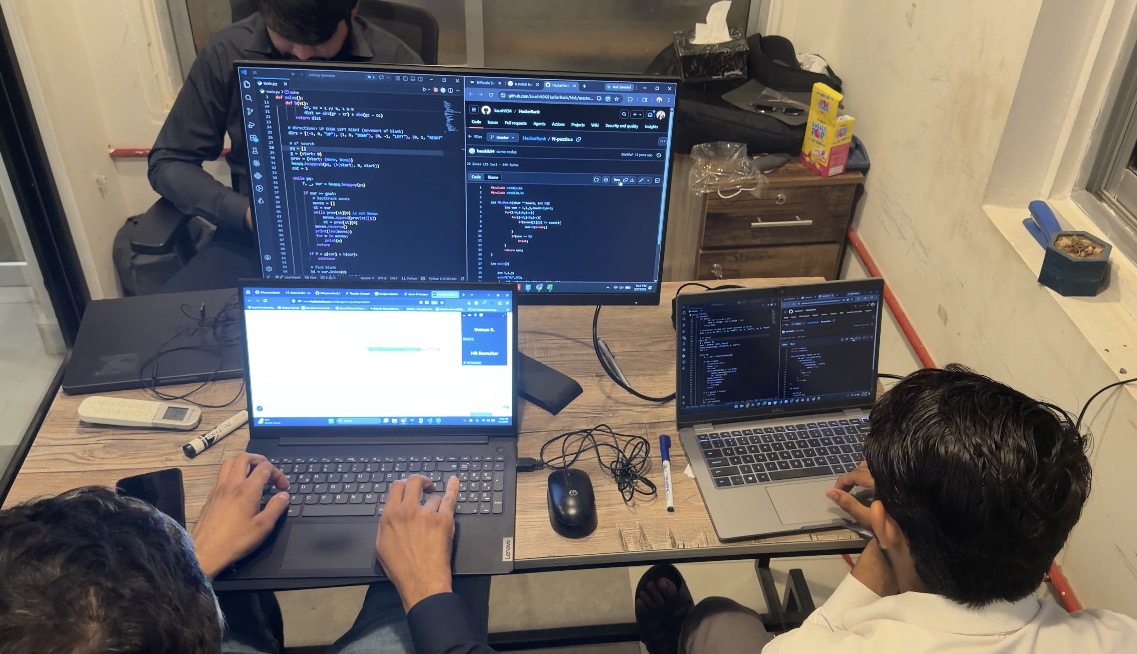
We engineer RAG systems with deep expertise across embeddings, vector databases, hybrid retrieval, and reranking, not generic LLM wrappers. Every pipeline is tuned to your corpus, your query patterns, and your accuracy bar so retrieval quality holds up under real production traffic.
We do not stop at demos. Xpiderz has shipped RAG systems into live production across support knowledge, internal search, sales enablement, and regulated decision support, with measurable improvements in answer accuracy and time-to-information.
Security, governance, and compliance are designed in from day one. We deploy private vector stores, customer-managed keys, permission-aware retrieval, PII redaction, and audit trails aligned with HIPAA, GDPR, GLBA, SOC 2, and EU AI Act requirements.
Working RAG prototypes in 2 to 4 weeks, production deployments in a single quarter. Every prototype is built on the same architecture as the final system, so there is no rewrite from POC to scale.
No vendor lock-in. We architect on Pinecone, Weaviate, Qdrant, Milvus, or pgvector with OpenAI, Anthropic, Google, Mistral, Llama, or open-source models running on your own infrastructure, swapping providers as better options ship.
Our RAG systems power compliance copilots, advisor research assistants, and policy lookups grounded in regulations, product disclosures, and account documentation, with full citation trails for audit.
For retail, our RAG pipelines index product catalogs, sizing guides, and policies to power conversational search, merchandising copilots, and post-purchase support grounded in your live SKU data.
HIPAA-aligned RAG over clinical guidelines, drug references, and provider documentation, surfacing source-backed answers for clinical decision support, patient triage, and care navigation.
RAG over SOPs, carrier contracts, customs documentation, and incident logs, giving dispatchers and ops teams instant, cited answers on exceptions, routing, and compliance rules.
In insurance, RAG indexes policies, endorsements, claims handbooks, and regulatory filings to power coverage lookup, underwriter copilots, and claims-handler assistants with citation-grade answers.
RAG over fare rules, loyalty programs, property fact sheets, and travel advisories, powering conversational booking assistants and guest concierges with current, citation-backed information.
RAG over service manuals, parts catalogs, and warranty rules, powering dealer service advisors and connected-car assistants with grounded answers across complex vehicle data.
RAG over listings, building documents, leases, and zoning data, powering buyer concierges, tenant support, and broker copilots with property-level answers and source citations.
RAG over engineering specs, SOPs, maintenance logs, and safety procedures, giving technicians and engineers instant, cited guidance on equipment, defects, and root-cause analysis.
RAG over case law, contracts, briefs, and internal precedent, powering attorney copilots, due-diligence research, and clause lookup with citation-backed answers ready for review.
RAG over textbooks, lecture notes, and curricula, powering tutoring assistants, admissions Q and A, and student-services copilots grounded in your institution's content.
RAG over documentation, runbooks, release notes, and content archives, powering in-product help, developer copilots, and editorial research tools across SaaS and media platforms.
Let's scope your RAG project and identify the fastest path from prototype to a cited, production-grade retrieval system.
Schedule a CallMulti-tenant AI voice-calling platform automating seller prospecting for Australian real-estate agencies.
AI-powered marketing analytics platform that reduced reporting time by 90% and doubled client capacity.
Full-spectrum market intelligence platform monitoring competitive signals across six data dimensions.
AI-powered personal research assistant for Master's and PhD students.
Conversational AI solution automating customer engagement through WhatsApp in the UAE market.
AI-powered legal consultation platform democratizing access to affordable legal guidance.
The world's first AI platform for legislative drafting and policy research.
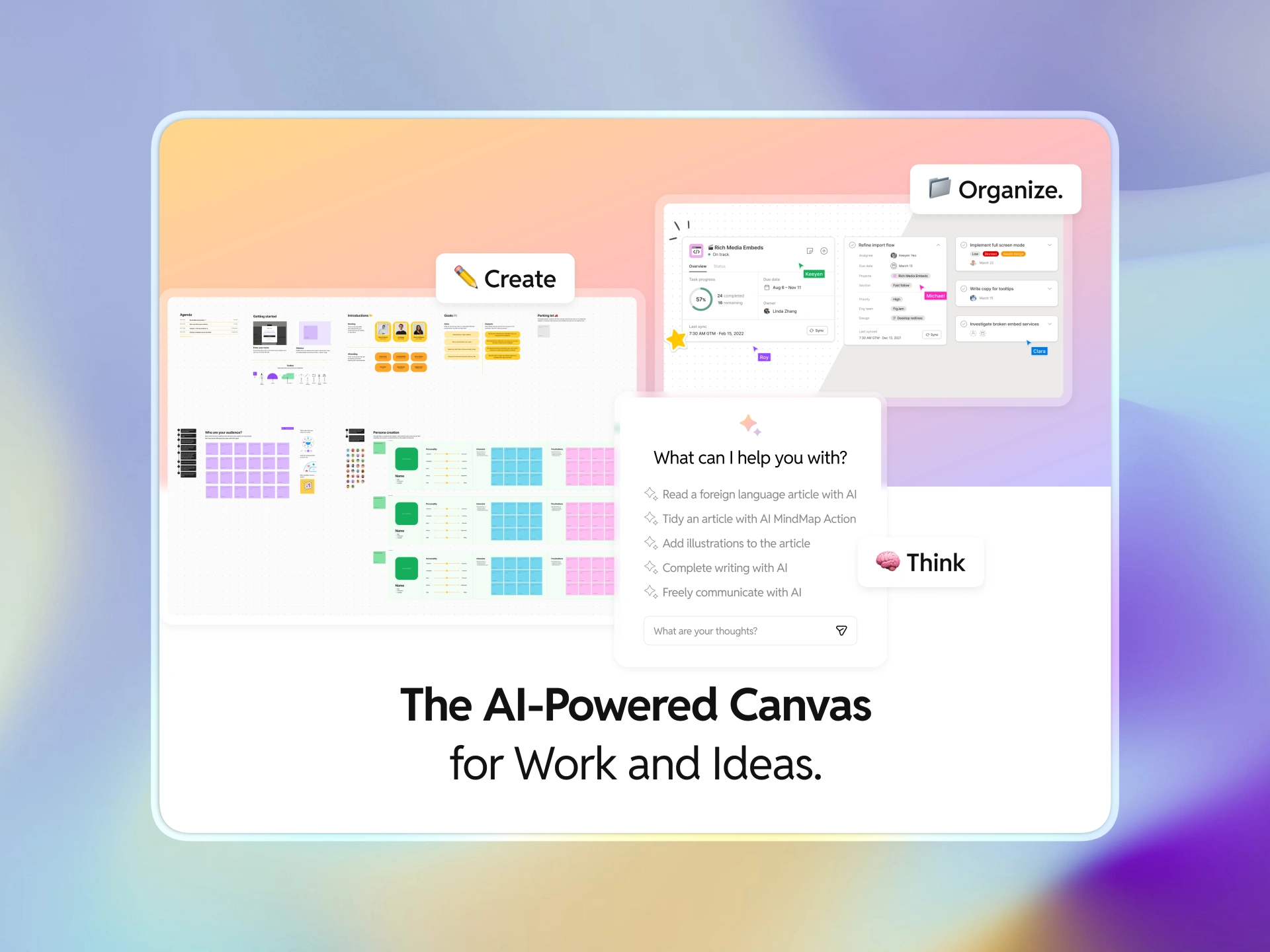
Product marketing deck for YaseenAI's Hive — the AI-powered canvas for work and ideas.
Clear answers on scope, cost, compliance, and how production-grade RAG development services actually work.
Yes, RAG development matters because it engineers retrieval augmented generation systems that ground every LLM response in your live knowledge base, turning generic, hallucination-prone models into accurate, citable assistants tuned to your data, your compliance posture, and your business workflows.
It depends on the problem. RAG fits when your knowledge changes often, must be citable, or spans large document corpora. Fine-tuning fits when you need to shift model behavior, tone, or domain language. Most enterprise systems are hybrid: RAG for facts, lightweight fine-tuning for style and structure.
Yes, we integrate RAG with Confluence, Notion, SharePoint, Salesforce, HubSpot, Zendesk, ServiceNow, custom databases, and document stores via APIs, webhooks, and connectors, while preserving SSO, role-based access, and audit trails from day one.
No, a production-grade RAG system does not require an unbounded budget. Pilots typically start around $25K and full enterprise platforms scale to $250K and above, scoped by corpus size, query volume, integrations, and compliance requirements.
Working RAG prototypes ship in 3 to 5 weeks. Full production deployments reach live traffic within a single quarter, with weekly demos against working software and a real go-live date committed during the scoping phase.
Yes, RAG is well suited to regulated industries. We design to HIPAA, GDPR, GLBA, SOC 2, and EU AI Act standards with private vector stores, customer-managed keys, permission-aware retrieval, PII redaction, citation trails, and full audit logging baked in from day one.
Yes, every RAG system is instrumented from day one with retrieval recall, answer faithfulness, hallucination rate, citation precision, and user-level KPIs like deflection, time-to-information, and revenue lift, so quality and ROI are observable in dashboards rather than anecdotal.
Yes, you own everything we build, including ingestion pipelines, embeddings, vector indexes, prompts, retrieval logic, evaluation suites, and infrastructure. No vendor lock-in and no per-seat licensing on the work we deliver.
Pinecone, Weaviate, Qdrant, Milvus, pgvector, Elastic, and Vespa on the retrieval side, paired with OpenAI, Anthropic, Google Gemini, Mistral, Meta Llama, Cohere, and open-source models running on your own infrastructure or in our managed environments.
Book a free discovery call to align on goals, receive a fixed-fee proposal within 48 hours, and a senior engineering pod kicks off within one to two weeks. No account-manager handoffs, no offshore subcontracting.