Faster time to market
Working LLM prototypes in 2 to 4 weeks and production deployments within a quarter, built on the same architecture as the final product so there is no rewrite from POC to scale.
Xpiderz is a senior large language model development company helping enterprises ship custom LLM applications, domain fine-tuning, RAG architectures, and secure enterprise deployments, engineered on your data and tuned for accuracy, cost, and measurable business impact at scale.
Enterprises are betting on large language models to power copilots, automation, and customer experiences, yet most teams stall on the same questions. Closed APIs deliver speed but raise concerns around data residency, cost, and vendor lock-in, while open models like Llama, Mistral, and Mixtral offer control but demand serious engineering to reach production accuracy. Teams must choose between fine-tuning and RAG, manage latency and inference cost, satisfy regulators on auditability and bias, and integrate the model into messy enterprise stacks with SSO, role-based access, and observable evaluation. Xpiderz closes this gap through senior LLM development services that combine model selection, data engineering, prompt and retrieval design, evaluation harnesses, and secure deployment aligned with your governance and ROI targets.
As a senior LLM development company, we bring deep expertise across transformer architectures, fine-tuning, RAG, evaluation, and high-throughput inference, building LLM applications that meet your accuracy, cost, and compliance targets.
Domain-specific fine-tuning on Llama, Mistral, Mixtral, GPT, Claude, and custom transformer architectures, using LoRA, QLoRA, SFT, DPO, and RLHF to align the model to your terminology, tone, and tasks while keeping training cost and inference latency under control.
Prompt and Retrieval Engineering
Hybrid prompt and RAG architectures with chunking, embedding selection, reranking, and guardrails, tuned for accuracy, citation quality, and hallucination control on your data.
Evaluation and Observability
Automated evals, golden datasets, human review loops, and live telemetry that track accuracy, factuality, latency, and cost so quality is measurable rather than anecdotal.
Inference Optimization
Quantization with GPTQ and AWQ, speculative decoding, KV-cache reuse, vLLM, TensorRT-LLM, and batched serving that cut latency and inference cost by up to 80 percent.
Safety, Alignment, and Governance
Red-team testing, jailbreak defenses, PII redaction, policy filters, and auditable evals to ship LLMs that satisfy security, legal, and regulatory review.
Production-grade serving on Kubernetes, vLLM, Triton, or managed clouds with auto-scaling, model versioning, A/B testing, streaming responses, audit trails, and dashboards, deployed inside your VPC or on a managed runtime that fits your data residency requirements.
Our streamlined LLM development process is designed for efficiency, moving from discovery to production through six structured stages tuned for grounded accuracy, governance, and measurable outcomes.
Why enterprises invest in custom LLM development, and the measurable outcomes Xpiderz delivers across product, operations, and competitive positioning.
Working LLM prototypes in 2 to 4 weeks and production deployments within a quarter, built on the same architecture as the final product so there is no rewrite from POC to scale.
Quantization, routing, caching, smaller distilled models, and batched serving routinely cut inference spend by 60 to 80 percent versus naive frontier-API usage.
Fine-tuning and RAG aligned to your terminology, tone, and workflows consistently outperform generic models on internal benchmarks for accuracy, citation quality, and task completion.
Your proprietary data, prompts, evaluations, and fine-tuned weights become durable IP that compounds with usage, instead of disposable assets sitting on someone else's API.
Private deployments, customer-managed keys, PII redaction, audit trails, and EU AI Act, HIPAA, GDPR, GLBA, and SOC 2 readiness engineered into the stack from day one.
Architectures that swap between OpenAI, Anthropic, Google, Mistral, Meta Llama, and self-hosted open models, so you upgrade as the frontier moves without rebuilding your stack.
Senior engineers, production proof, and zero lock-in. Every large language model we ship is engineered for accuracy, governance, and measurable ROI from day one.
We build on real transformer research, fine-tuning, evaluation, and high-throughput inference, not stitched-together blog posts. Every architecture is tuned to your data, latency, and cost targets so it holds up under real enterprise traffic.
Across copilots, automation, RAG assistants, and internal tooling, every system shipped with tracked accuracy and observable ROI.
Built on the same fine-tuning and serving stack as the final product, so there is no rewrite from POC to scale.
We route the right model to the right task across frontier and open-source providers.
Private deployments, customer-managed keys, audit trails, and red-team testing aligned with HIPAA, GDPR, SOC 2, and EU AI Act.
Model weights, prompts, evaluation suites, and infrastructure are yours forever with no per-seat licensing or vendor lock-in.
From regulated finance to clinical research, we ship domain-tuned large language models that resolve real workflows for enterprise teams.
Audit-ready LLMs that draft credit memos, summarize filings, automate KYC, and power analyst copilots inside the bank perimeter.
HIPAA-aligned models for clinical note summarization, prior authorization, patient triage, and literature review.
Underwriting and claims LLMs that extract data from PDFs, draft adjuster narratives, and surface coverage decisions with audit trails.
Legal LLMs that draft contracts, surface relevant clauses, summarize depositions, and power attorney copilots tuned to firm templates.
Product copy generation, search reranking, personalized recommendations, and merchandiser copilots that lift conversion.
Engineering LLMs that surface SOPs, summarize maintenance logs, draft work orders, and power technician copilots on plant data.
Adaptive tutoring assistants, lesson planning copilots, and content generation tools tuned to curriculum standards.
In-product copilots, search assistants, content drafting tools, and personalization layers built native to your product.
Let's scope your LLM project and identify the fastest path from prototype to production deployment, with senior engineers on day one.
Schedule a CallMulti-tenant AI voice-calling platform automating seller prospecting for Australian real-estate agencies.
AI-powered marketing analytics platform that reduced reporting time by 90% and doubled client capacity.
Full-spectrum market intelligence platform monitoring competitive signals across six data dimensions.
AI-powered personal research assistant for Master's and PhD students.
Conversational AI solution automating customer engagement through WhatsApp in the UAE market.
AI-powered legal consultation platform democratizing access to affordable legal guidance.
The world's first AI platform for legislative drafting and policy research.
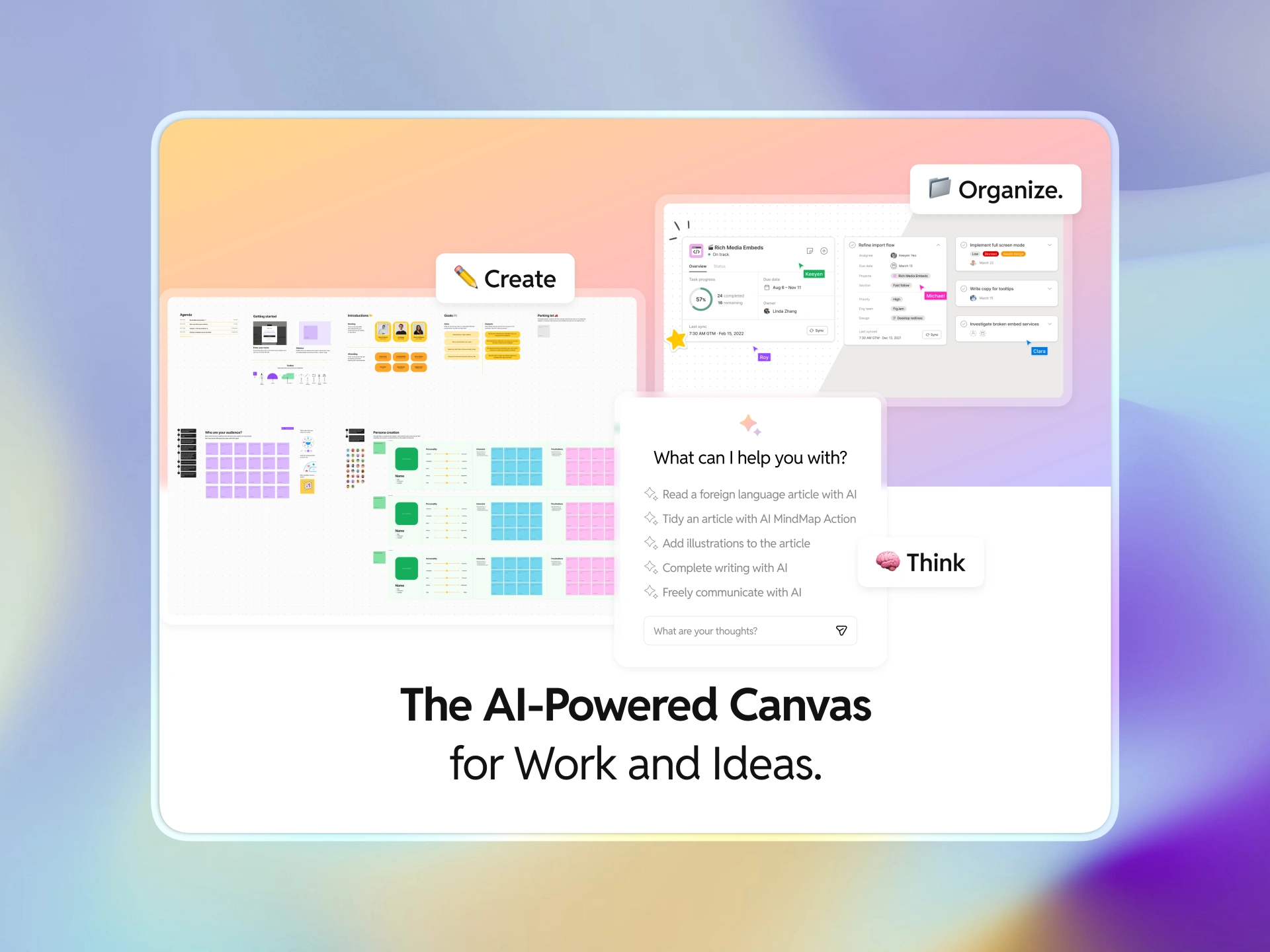
Product marketing deck for YaseenAI's Hive — the AI-powered canvas for work and ideas.

AI support assistant answering dealer install questions in seconds, trained on manuals and years of real tickets.
Clear answers on scope, cost, compliance, and how production-grade LLM development services actually work.
Large language models, or LLMs, are deep neural networks trained on massive text corpora to understand and generate human language. Models such as GPT, Claude, Gemini, Mistral, and Llama can summarize documents, answer questions, write code, reason across context, and power copilots, chatbots, and automation across enterprise workflows.
In AI, large language models are transformer-based systems that learn statistical patterns from text to predict the next token in a sequence. This simple objective, applied at massive scale, gives LLMs the ability to perform translation, summarization, reasoning, classification, and generation tasks without task-specific training.
Hands-on large language models training is the practical process of fine-tuning a base model on your data using techniques such as supervised fine-tuning, LoRA, QLoRA, and reinforcement learning from human feedback. It teaches a foundation model to follow your domain language, tone, structure, and policy constraints.
The foundations of large language models include the transformer architecture, self-attention, tokenization, pretraining on web-scale corpora, instruction tuning, alignment via RLHF or DPO, and inference techniques like quantization and speculative decoding. Together they define how an LLM learns, behaves, and scales in production.
Generative AI is the broad field of AI systems that produce new content, including images, audio, video, code, and text. Large language models are the subset focused on text. Every LLM is a generative AI system, but not every generative AI system is an LLM.
Large language models are used in AI for customer support copilots, internal knowledge assistants, document summarization, code generation, search ranking, content creation, structured data extraction, and intelligent automation. They serve as the reasoning layer behind modern AI applications across industries.
Large language models safety is important because LLMs can hallucinate facts, leak sensitive data, follow prompt-injection attacks, or generate biased and unsafe outputs. Enterprises need evaluation suites, guardrails, red-teaming, and observability so the model behaves predictably under regulated, customer-facing, and high-stakes use.
It depends on the task. Large language models are the right choice when the workload is text reasoning, conversation, code, or document understanding. Broader generative AI, including image, audio, and video models, is the right choice when you need multimodal output. Most enterprise stacks combine both.
An LLM large language model is a transformer-based AI system with hundreds of millions to hundreds of billions of parameters, trained on huge text datasets so it can understand context, follow instructions, and generate coherent, useful responses across general and domain-specific tasks.
Query rewriting for retrieval-augmented large language models reformulates a user’s raw question into one or more optimized queries before retrieval. It improves recall, disambiguates intent, expands acronyms, and decomposes complex questions so RAG systems fetch the most relevant context for the LLM to ground its answer.
A survey of large language models covers architectures, pretraining and fine-tuning techniques, scaling laws, alignment and safety, evaluation benchmarks, multimodal extensions, efficient inference, open vs closed models, and emerging research directions such as agents, tool use, and long-context reasoning.
The best large language models available today include OpenAI GPT, Anthropic Claude, Google Gemini, Meta Llama, Mistral, and Cohere Command, along with strong open-source options like Llama, Mixtral, Qwen, and DeepSeek. The right model depends on accuracy, latency, cost, and deployment constraints.