Real-time visual intelligence
See what is happening across your cameras, lines, and sites the moment it happens. It reads the video in milliseconds and turns it into something you can act on right away.
Xpiderz delivers senior computer vision development services for enterprises, shipping custom object detection, OCR and document AI, video analytics, visual inspection, and edge deployments engineered on your image and video data for production-grade accuracy, latency, and measurable business impact.
Most businesses have way more video and images than they know what to do with. The cameras keep running and the files keep stacking up, but almost none of it gets a second look. And honestly, that is no surprise. Who has time to tag thousands of images by hand? The older tools are finicky and fall over the moment something changes. Worse, a lot of these projects look slick in a demo and then never survive contact with the real world. Building one that actually holds up day to day is the hard part, and that is what we do. We train the model, clean up your data, and set up everything around it that keeps it running. It can sit on your own devices or in the cloud, whichever suits you. And once it is live we do not walk away. We keep tuning it so it gets sharper over time instead of going stale.
Our team knows this work end to end, from training the models and preparing the data to making them fast and running them on real devices. The result is vision systems that can spot, sort, read, and act on images and video at scale.
Point it at a live feed and it locks onto whatever you care about and follows it around the screen. We teach it your objects, not some stock set it shipped with. It is fast too. Fast enough for a security camera, a busy shop floor, or a car that has to react in real time. The heavy lifting runs on well-tested models like YOLOv8, RT-DETR, and Detectron2.
OCR and Document AI
Give it an invoice, an ID, a contract, even someone's messy handwriting, and it pulls out what matters and hands it back as clean data you can actually use. PaddleOCR and Tesseract do the reading. On top of that we add our own models that understand how a page is laid out.
Video Analytics and Action Recognition
Process live and recorded video for action recognition, anomaly detection, crowd counting, and event triggering using temporal CNNs and video transformers.
Image Classification and Segmentation
At the simple end, it tells you what an image is. Push further and it will outline the exact pixels that make up each thing in the shot. Feed it your own labeled examples and it picks out defects on a line, reads a medical scan, or tidies your product photos into groups. The models doing the work include EfficientNet, ConvNeXt, Vision Transformers, and Mask R-CNN.
Visual Search and Similarity
Let people search with a picture instead of words. It also finds duplicates and serves up more-like-this suggestions across your catalog or media library. The models behind it, CLIP and DINOv2, actually understand what is in an image, not just its file name.
Sometimes the cloud just is not an option. So we shrink the model down to run right on the gadget itself, a Jetson, a Raspberry Pi, a Hailo board, a phone, whatever you have on hand. It works in real time with no trip to a server and back. Getting it that small and fast is where TensorRT, ONNX Runtime, OpenVINO, and CoreML come in.
Our streamlined process is designed for efficiency, moving from discovery to production through six structured stages tuned for accuracy, low latency, and measurable outcomes.
Why enterprises invest in computer vision development services, and the measurable outcomes Xpiderz delivers across manufacturing, retail, logistics, and regulated industries.
See what is happening across your cameras, lines, and sites the moment it happens. It reads the video in milliseconds and turns it into something you can act on right away.
Swap manual visual checks and audits for a system that runs across every shift and site on its own. Most clients make their money back within about six months.
It catches defects, contamination, and odd cases that tired eyes miss. More products pass the first check, and you face fewer warranty claims and recalls.
It reads invoices, IDs, and forms and pulls the data out accurately, so no one has to type it in by hand and the rest of your process moves faster.
Run the same vision system across hundreds of cameras and locations, all managed from one place, so updates and monitoring stay simple as you grow.
It runs right on the device instead of sending images to the cloud. That keeps sensitive footage private, cuts the delay, and keeps working even where the connection is poor.
Senior engineers, production proof, and zero lock-in. Every vision system we ship is engineered for accuracy, latency, and measurable ROI from day one.
We build on real research and proper engineering, not off-the-shelf APIs that quit when things get serious. Every model is tuned to your images, your hardware, and your goals, so it stays accurate and fast even under heavy real-world use.
Across manufacturing, retail, logistics, security, and medical workflows, every system shipped with tracked accuracy and observable ROI.
We build the pilot on the same setup as the final product, so there is no rewrite when you scale up.
We pick the right tools for each job, whether it runs in the cloud, on edge hardware, or right on the device.
We can run everything on your own servers or devices. You hold the keys, personal details are blurred out, and every action is logged, in line with HIPAA, GDPR, SOC 2, and the EU AI Act.
The models, the data, the training scripts, the tests, and the setup are all yours to keep. No per-seat fees, no lock-in.
From manufacturing lines to clinical imaging, we ship production-grade vision systems that turn cameras and sensors into measurable enterprise outcomes.
It sits over the line and flags surface defects, missing parts, or an assembly that went wrong the moment it happens. The payoff: more units pass first time, less gets thrown out as scrap, and far fewer warranty headaches down the road.
HIPAA-ready models that read medical images. They help triage radiology scans, take a first pass at pathology slides, and screen skin conditions. And every second opinion they give is one you can audit.
Search by photo, self-checkout, shelf checks, theft prevention. It all adds up to more sales and protected margins, whether the shopper is standing in your store or browsing your site.
It measures parcels, reads barcodes and labels, catches damage, and counts pallets. Your warehouse moves quicker, and your team scans a lot less by hand.
We work on the driver-assist and self-driving side, watch whether the driver is actually paying attention, and read plates on the move. All of it has to run fast and safely on the hardware built into the car, so that is what we design for.
It keeps watch for break-ins, weapons, and anyone missing their safety gear. It can also follow the same person as they move from one camera to the next, and read the mood of a crowd. The whole point is to head off trouble, not just film it and check the tape later.
From drone and satellite shots, it checks how your crops are doing, catches pests and weeds early, keeps tabs on livestock, and forecasts the harvest ahead. The aim is simple: grow more, spend less.
It reads IDs and paperwork to confirm who someone is, sizes up damage straight from claim photos, and digs the key terms out of contracts. Sign-up gets quicker, and fraud has a much harder time slipping through.
Let's scope your computer vision project and identify the fastest path from prototype to production deployment on cloud or edge.
Schedule a CallMulti-tenant AI voice-calling platform automating seller prospecting for Australian real-estate agencies.
AI-powered marketing analytics platform that reduced reporting time by 90% and doubled client capacity.
Full-spectrum market intelligence platform monitoring competitive signals across six data dimensions.
AI-powered personal research assistant for Master's and PhD students.
Conversational AI solution automating customer engagement through WhatsApp in the UAE market.
AI-powered legal consultation platform democratizing access to affordable legal guidance.
The world's first AI platform for legislative drafting and policy research.
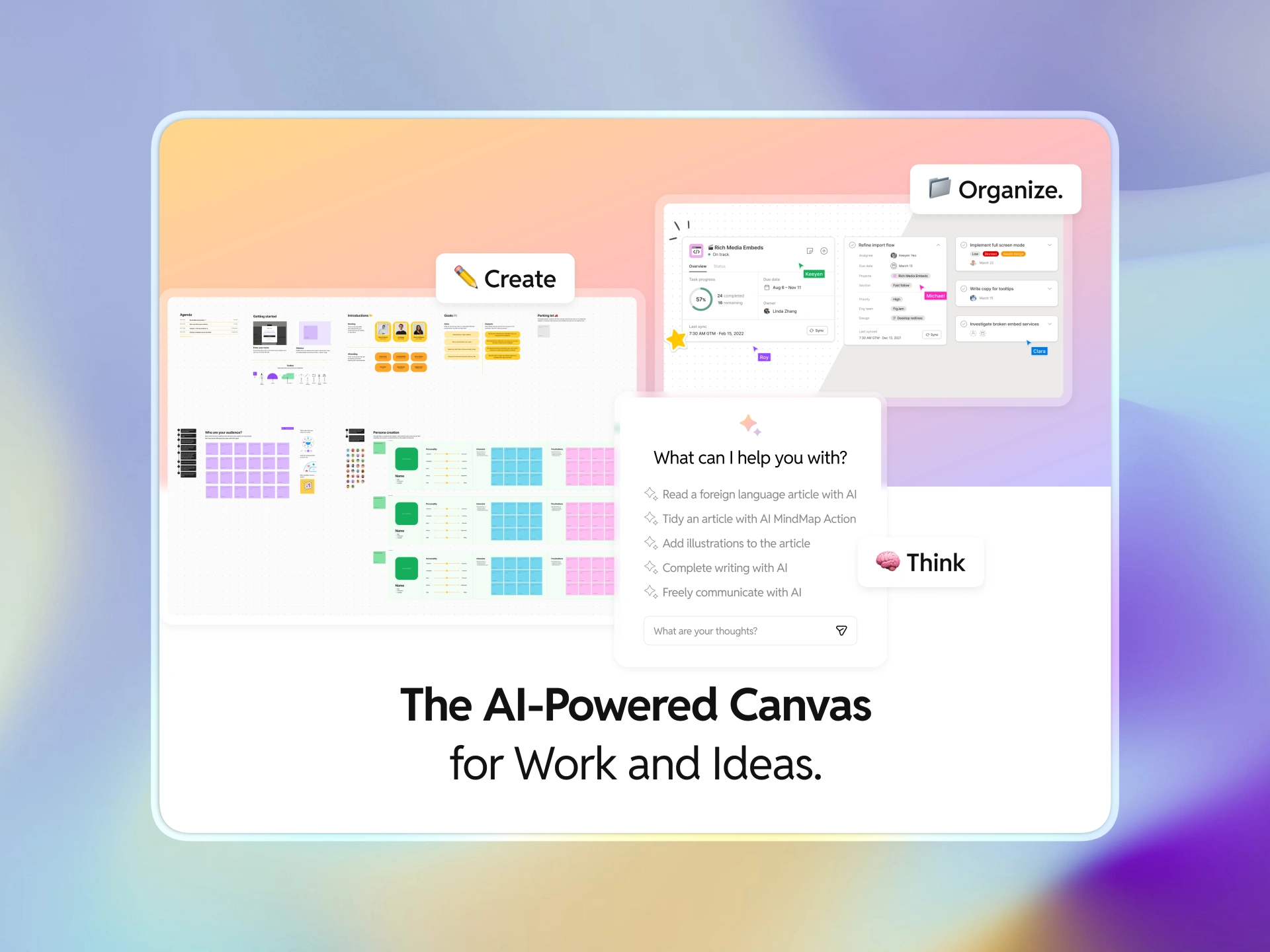
Product marketing deck for YaseenAI's Hive — the AI-powered canvas for work and ideas.
Clear answers on scope, cost, compliance, and how production-grade computer vision development services actually work.
Computer vision development means building AI that can look at images and video and make sense of them. It spots objects, sorts them, reads text, and tracks movement, then turns all that into clean data your other systems can act on. That powers things like inspection, automation, safety, and better customer experiences, with accuracy you can measure.
It is building software that can look at images and video and understand what is in them. The software learns to spot objects, read text, tell things apart, and follow movement, then turns all of that into data your other systems can use. In short, it gives your software a working pair of eyes.
Quite a range. Spotting and tracking objects in video, reading documents and handwriting, sorting and labeling images, marking out the exact shape of things in a picture, search by image, and getting models to run right on a device. We also handle the parts around it, like preparing your data, connecting to your cameras and systems, and keeping the model tuned after launch.
Old-style image processing follows fixed rules you write by hand, like sharpen this or find that exact shape. It works until the lighting changes or something looks a little different, then it falls apart. Computer vision learns from examples instead of rules, so it copes with the messy, real-world variety that trips up the old way. One is a rigid recipe. The other actually learns what it is looking at.
It starts with examples. We gather and label images that show what you want the system to recognize, and the model trains on those until it can do the same on images it has never seen. Then we make it fast, hook it up to your cameras or files, and put it live. After that we keep watching how it does and feed real cases back in so it keeps getting better.
It does visual work at a scale and speed no team can match, and it never gets tired or distracted. It catches defects and risks people miss, reads documents without anyone typing them in, runs around the clock, and turns footage you are already collecting into something useful. For most companies that adds up to lower costs, fewer mistakes, and faster decisions.
We use the main AI toolkits like PyTorch and TensorFlow, and proven models such as YOLO, Detectron2, EfficientNet, Vision Transformers, CLIP, and DINOv2. For reading text we use PaddleOCR and Tesseract. To run models on devices we use TensorRT, ONNX Runtime, OpenVINO, and CoreML, on hardware like NVIDIA Jetson, Hailo, and Raspberry Pi, plus cloud GPUs on AWS, Azure, and Google Cloud. We pick whatever fits the job.
It depends on how unusual your images are. Ready-made models work fine for everyday things like common objects, text, and faces. You need custom training for your own defects, niche products, medical scans, or unusual settings. Most companies do a mix: start from a ready-made model, then train the last part on your own labeled images.
Yes, we work with the cameras and systems you already have, including IP and industrial cameras, video streams, phones, and edge devices. We send the results into your existing software, like your ERP, warehouse, or records systems, through secure connections, with no rip-and-replace. Your single sign-on, access rules, and audit logs stay in place from day one.
A focused pilot usually starts around $25K, and a full company-wide rollout can reach $250K or more. The price depends on how many cameras you have, how tricky the things you are detecting are, how much labeling is needed, what hardware it runs on, and the rules you must follow.
A working prototype ships in 3 to 6 weeks. A full rollout across several sites is usually live within a quarter. You get a demo every week, and we lock in a real go-live date while we are still planning.
Yes, we build to HIPAA, GDPR, SOC 2, and EU AI Act standards. We can run it on your own servers or devices, you hold the keys, faces and personal details are blurred out, every action is logged, and your data stays where it has to, all set up from day one for medical, financial, and safety-critical work.
We track the numbers from day one and put them on a dashboard. Things like how often it spots the right thing, how often it gets it wrong, how many items each camera handles, how many defects it catches, hours of work saved, and extra revenue. So you can see the return, not just take our word for it.
Yes, you own everything we build: the trained models, the training data, the labeling guidelines, the tests, the code, and the setup it runs on. No lock-in and no per-camera fees on what we deliver.
We work with the main AI toolkits, including PyTorch, TensorFlow, ONNX Runtime, TensorRT, OpenVINO, CoreML, and MediaPipe. We run models on devices like NVIDIA Jetson, Hailo, Google Coral, Raspberry Pi, iPhone, Android, and in the browser, on regular servers, and on cloud GPUs from AWS, Azure, and Google Cloud.
Book a free discovery call so we understand the goal. You get a fixed-fee proposal within 48 hours, and a senior team starts within one to two weeks. No account managers in the middle, and no offshore subcontracting.