
AISearchforHealthcareData:OmniSeek
Anall-in-oneAIsearchengineforaleadinghealthtechenterprisewhoseteamswerediggingthroughfoldersandSQLtablesbyhand.OmniSeekletsanyoneaskaquestioninplainEnglishandsearchesdatabases,documents,andimagesatonce.Complexqueriesrun70%fasterandresultsare90%morerelevant.
Who is the client and what did they want?
The client is a large healthtech enterprise. Thousands of healthcare companies use its product to manage a huge amount of data about user complaints on medical equipment and pharmaceutical products. It is one of the main names in complaint management.
To stay ahead of competitors, the company wanted to upgrade the search engine inside its product. The plan was to bring several search methods together and let AI decide which one to use for each question.
The goal was clear. Health organizations have structured and unstructured data spread over many separate systems. They should be able to reach all of it from one platform, without jumping between tools. Xpiderz built that search engine, and we called it OmniSeek.
What was slowing the client down?
The client's quality management work had one basic problem. A high volume of structured and unstructured data was scattered over separate systems, and nothing connected them.
Employees spent valuable time searching by hand through folders and SQL tables. It was slow, it was easy to make a mistake, and it needed technical knowledge that many people on the team did not have. The end result was that customer complaints took longer to handle than they should.
What did the search engine need to do?
We were asked to build a smart, all-in-one AI search engine that uses large language models together with several AI search methods. It had to cover four jobs:
- Run complex SQL queries on structured data.
- Do AI similarity searches using vector embeddings.
- Find the most similar documents from a short description.
- Search inside images, not only text.
How does OmniSeek work?
The stakeholders pictured one search engine where a user finds what they need right away. No moving between systems, and no need to know how to write a database query. That would cut manual work and let the client's teams spend their time on quality management, not on hunting for data.
To get there, we built an orchestrated AI search engine. One orchestrator sits at the center. It looks at each search request and directs a group of agentic AI tools that work together to answer it, even when the request is complex.
Under the hood, OmniSeek has six working parts:
-
LLM-Powered Query Generation
We added OpenAI's GPT model as a translator for the search engine. Users type a simple, everyday question and the system turns it into an optimized SQL query on its own. LangChain and LangGraph handle the multi-step reasoning, so the model understands the context of a question and not only its keywords.
-
Vector-Based Similarity Search
We deployed transformer models that turn both text and images into vector embeddings. The embeddings are stored in a vector database and pulled back quickly, which makes similarity searches accurate.
-
Multimodal Search
The search works on many data types: structured SQL databases, unstructured text, and images. We built a pipeline that reads the text inside images with optical character recognition (OCR), so images can be found by what they say.
-
Scalable Orchestration
To handle the client's scale, we built the solution on Azure Fabric and Azure Machine Learning. Kusto Query Language (KQL) gives fast analytics and indexing on very large datasets. A central orchestrator manages every AI workflow, and under it sit specialized agents. One writes dynamic SQL queries, another processes image data, and so on.
-
Unified Data and Context
We used the Model Context Protocol (MCP) to connect multiple data sources and sync them in real time through one context layer. Every search runs on the most current and complete data available.
-
Security and Compliance by Design
The platform was designed for the strict rules of healthcare from day one. It uses role-based access control (RBAC), strong encryption, and other regulatory compliance measures. The client can grow the system knowing sensitive data stays protected.
Measured Results
What do the numbers say?
What changed once the client's teams could search everything from one place.
What did the client get out of it?
The client now has a fast AI search engine built on Azure. It uses GPT-4o to understand natural language questions and sends each one to the right kind of search.
- One tool for everything. Employees find any information they need from a single search box.
- No technical skills needed. People who cannot write SQL get the same answers as people who can.
- Faster complaint handling. With scattered data brought together, the full complaint management process moves quicker and decisions get made sooner.
What happens next?
We are still working with the client. The next stage is to connect more data sources to OmniSeek and keep adding to what the platform can do.
Is your data spread over too many systems?
Tell us where your team goes looking for answers. We reply within 48 hours, and everything you share stays confidential.
K2X Auto
Multi-tenant AI voice-calling platform automating seller prospecting for Australian real-estate agencies.
InsightsBot
AI-powered marketing analytics platform that reduced reporting time by 90% and doubled client capacity.
Harbinger AI
Full-spectrum market intelligence platform monitoring competitive signals across six data dimensions.
Sokrateque
AI-powered personal research assistant for Master's and PhD students.
Eona
Conversational AI solution automating customer engagement through WhatsApp in the UAE market.
INPRO AI Legal
AI-powered legal consultation platform democratizing access to affordable legal guidance.
LAWEP
The world's first AI platform for legislative drafting and policy research.
Hive AI
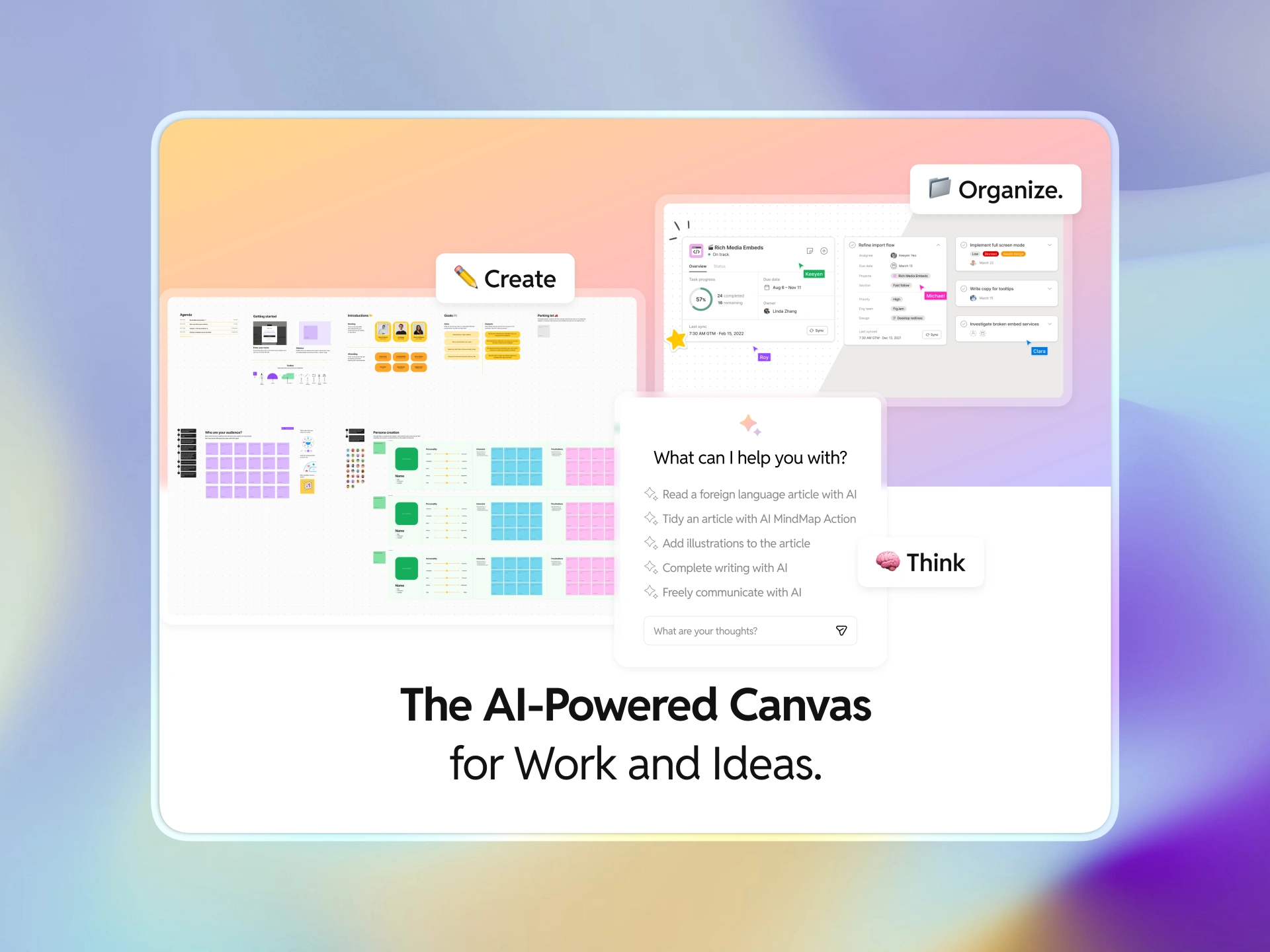
Product marketing deck for YaseenAI's Hive — the AI-powered canvas for work and ideas.

DealerDesk
AI support assistant answering dealer install questions in seconds, trained on manuals and years of real tickets.

TalentLoop
Cloud-native recruitment CRM unifying matching, scheduling, placements, payroll, and invoicing for a US staffing agency.

CareGraph
HIPAA-compliant multi-agent clinical assistant giving clinicians patient data and guideline suggestions inside the EHR workflow.

ThreadMind
Agentic RAG chatbot turning years of scattered Slack logs into a secure, searchable corporate brain for an EdTech company.

FormSense
AI document engine reading patient enrollment forms from any manufacturer, cutting processing time by 90% for a US healthcare tech provider.

HazardLens
AI hazard detection reading camera images from elderly care facilities and flagging risks like water spills with 98% accuracy.

DeskMate
Secure AI support assistant answering employee questions inside Google Workspace, making ticket resolution 70% faster for a US technology enterprise.

ModelForge
Central AI experimentation platform for a US customer service tech company, making prototyping 40% faster and deployment to production 50% faster.