
FromScatteredAIExperimentstoOneEnterpriseAIRoadmap:ClearRoute
DrivelineAutoGroupisalarge,multi-brandautomotiveservicescompanyintheUS.ItsdepartmentswerealltryingAIontheirown,withnosharedplan.Weworkedwithitsleaderstopicktheusecasesthatmatter,settherulesfordelivery,anddesignanAICenterofExcellencetorunitall.
Who is the client and what did they need?
Driveline Auto Group is a large automotive services company in the United States. It runs several brands under one roof, and each brand has its own teams, tools, and habits.
The leadership wanted AI to become a real edge over competitors, and not just a side project. The interest was already there. Many departments had started their own AI trials. What was missing was one plan that tied those efforts together.
Driveline brought in Xpiderz for an advisory engagement, which we call ClearRoute. This was not a software build. The output was a strategy: which AI use cases to back, in what order, under what rules, and who runs the program.
What was going wrong with AI inside the company?
Nobody was coordinating the work. Each department ran its own experiments, and that caused four problems.
- Duplicate work. Different teams were solving the same problem without knowing about each other.
- Unclear ownership. It was not clear who was responsible for an AI project once it started, or who decided if it should continue.
- Nothing scaled. Trials stayed small. A result in one department rarely made it to the rest of the business.
- No shared view. There was no agreed list of the use cases that mattered most, and no picture of the skills and tools the company would need to deliver them.
How did ClearRoute bring order to it?
We built a structured AI strategy that turned the scattered efforts into one prioritized roadmap. The work was done together with key stakeholders across the business, so the plan reflects how the company really runs.
Each possible use case was judged on two things. The first is business value, meaning what it is worth if it works. The second is technical feasibility, meaning whether the data, systems, and skills are there to build it. Use cases that scored well on both went to the front of the line.
A list of projects is not enough by itself, so we also defined how AI work gets approved, delivered, and owned. That became the base for the company's AI Center of Excellence.
The engagement covered four pieces of work:
-
Finding High-Impact Use Cases
We worked with key stakeholders to bring every AI idea and running trial into one view, then picked out the ones with the most impact on the business.
-
A Prioritized Roadmap
The use cases were ranked by business value and technical feasibility and laid out in order. The company now knows what to start first and what can wait.
-
Governance and Delivery Processes
We defined how an AI idea gets approved, who owns it, and how it moves from trial to a working solution. The same rules now apply to every department.
-
AI Center of Excellence Design
We designed the structure of the Center of Excellence and its operating rhythm, meaning how the group is set up and how often it meets, reviews, and decides.
What does the AI Center of Excellence do?
The Center of Excellence is the one place where AI work across all brands and departments comes together. It gives the roadmap an owner.
- One structure. A clear setup for who is involved and what each group is responsible for.
- A steady rhythm. A regular cycle for reviewing progress, making decisions, and updating priorities.
- Shared governance. The same approval and ownership rules for every AI project, wherever it starts.
- Shared capabilities. Skills and tools are built once and reused, so departments stop paying for the same thing twice.
Project Snapshot
What was delivered?
This was a strategy engagement, so the results are decisions and plans, not software metrics.
What did the client get out of it?
Driveline came away with clarity. The leadership and the departments now agree on what AI is for in the company and where to spend first.
- Strategic clarity. A shared view of the AI use cases that matter and the capabilities they need.
- Alignment. Departments work from one plan, so effort is no longer repeated.
- A plan driven by the business. Trial and error gave way to an execution plan tied to business value.
- A base that scales. Governance and the Center of Excellence give the company a footing for long-term advantage.
What happens next?
With the roadmap agreed, Driveline can start on the top use cases in order and run them through the new delivery process. The Center of Excellence keeps the plan current. As projects finish and the business changes, priorities get reviewed and the roadmap is updated.
Are your teams all trying AI in different directions?
Tell us where AI stands in your company today. We reply within 48 hours, and everything you share stays confidential.
K2X Auto
Multi-tenant AI voice-calling platform automating seller prospecting for Australian real-estate agencies.
InsightsBot
AI-powered marketing analytics platform that reduced reporting time by 90% and doubled client capacity.
Harbinger AI
Full-spectrum market intelligence platform monitoring competitive signals across six data dimensions.
Sokrateque
AI-powered personal research assistant for Master's and PhD students.
Eona
Conversational AI solution automating customer engagement through WhatsApp in the UAE market.
INPRO AI Legal
AI-powered legal consultation platform democratizing access to affordable legal guidance.
LAWEP
The world's first AI platform for legislative drafting and policy research.
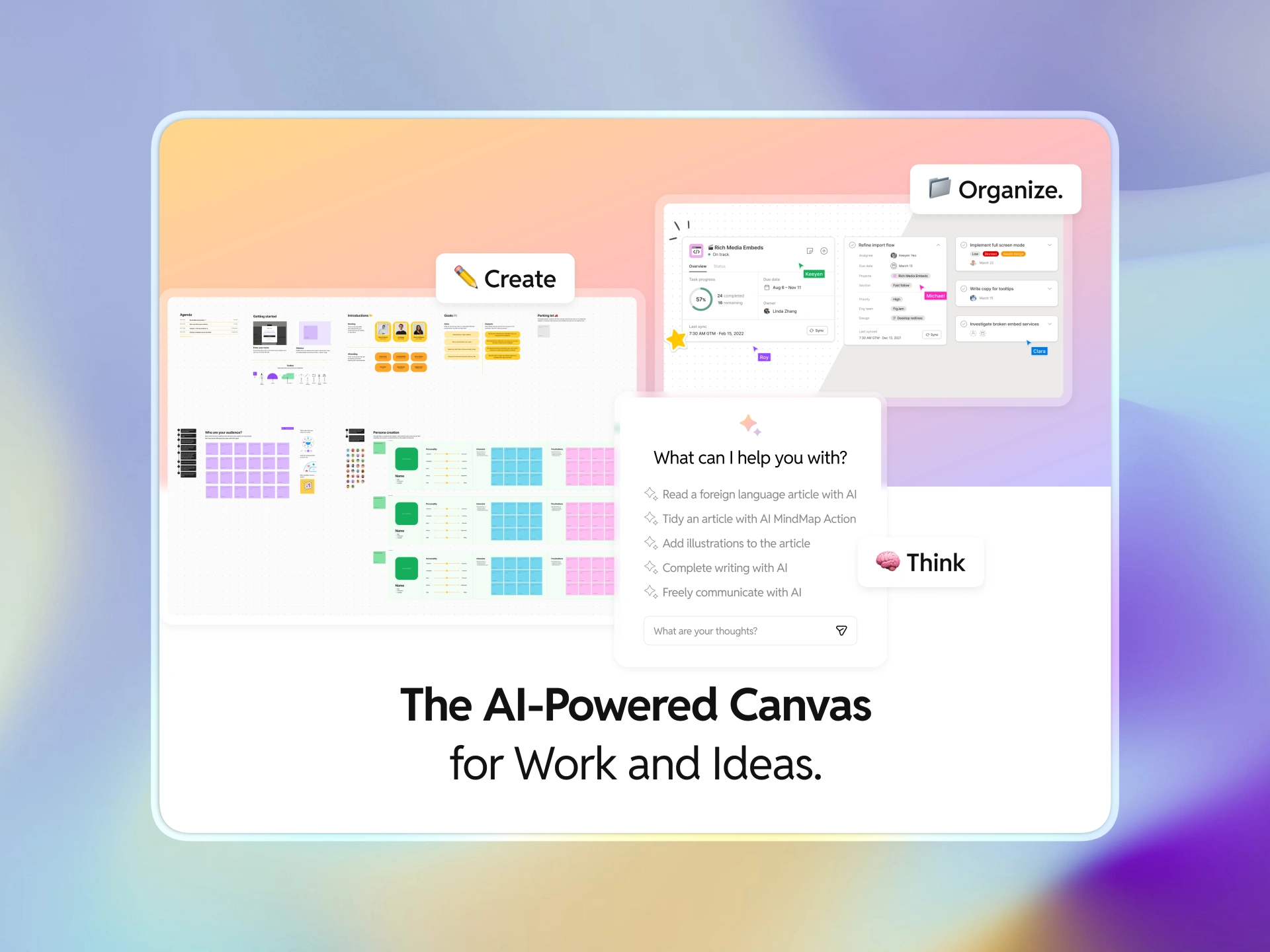
Hive AI
Product marketing deck for YaseenAI's Hive — the AI-powered canvas for work and ideas.

DealerDesk
AI support assistant answering dealer install questions in seconds, trained on manuals and years of real tickets.

TalentLoop
Cloud-native recruitment CRM unifying matching, scheduling, placements, payroll, and invoicing for a US staffing agency.

CareGraph
HIPAA-compliant multi-agent clinical assistant giving clinicians patient data and guideline suggestions inside the EHR workflow.

ThreadMind
Agentic RAG chatbot turning years of scattered Slack logs into a secure, searchable corporate brain for an EdTech company.

FormSense
AI document engine reading patient enrollment forms from any manufacturer, cutting processing time by 90% for a US healthcare tech provider.

HazardLens
AI hazard detection reading camera images from elderly care facilities and flagging risks like water spills with 98% accuracy.

DeskMate
Secure AI support assistant answering employee questions inside Google Workspace, making ticket resolution 70% faster for a US technology enterprise.

OmniSeek
All-in-one AI search engine for a healthtech enterprise, searching SQL data, documents, and images in plain English with 90% better relevance.

ModelForge
Central AI experimentation platform for a US customer service tech company, making prototyping 40% faster and deployment to production 50% faster.

MindHaven
AI chatbot giving 24/7 mental health support for a US wellness startup, reaching 1000+ users in its first few days after launch.

TrackPilot
AI voice assistant letting musicians control their studio software by voice and text. The MVP raised investor interest by 65% for a music production startup.

AccrediFlow
AI layer writing university accreditation narratives from evidence files with every source cited, cutting preparation time by 90% for a US legal service provider.

DealSight
Machine learning underwriting system predicting resale value, rehab cost, and time to sell inside Salesforce, with 31% lower ARV error for a US real estate investor.

HangarIQ
AI assistant finding past aircraft maintenance fixes in seconds with cited answers. A pilot saw about 30% fewer recurring actuator issues for a US aviation maintenance company.

HireSignal
AI agent automating job postings, candidate targeting, and ad budgets for a recruitment marketing platform, built with LangChain and RAG on Google Cloud.