
MachineLearningforRealEstateUnderwriting:DealSight
CedarlineHomesbuys,renovates,andresellshousesintheUSMidwest.Webuiltthreemachinelearningmodelsthatpredictresalevalue,rehabcost,andtimetosell,andweputtheminsidetheSalesforcescreenstheirunderwritersalreadyuse.Theteamcannowreviewmoredealswithoutunderwritingcostgrowingatthesamepace.
Who is the client and what did they need?
Cedarline Homes is a real estate business in the US Midwest. It buys houses, renovates them, and sells them again. Most of the profit on a deal is decided on day one, by the price paid for the house. So the underwriting step, where the team works out what to offer, decides how well the company uses its money.
Cedarline wanted to grow. That meant looking at many more deals, but without hiring underwriters at the same rate. It also wanted offers to be more consistent, and to make real use of 15 years of its own deal history along with current market data.
They asked Xpiderz to design and deliver the system. We call it DealSight. It does not replace the underwriters. It gives them three predictions for every property, and those predictions feed the Maximum Allowable Offer (MAO) calculation that sets the offer price.
- ARV. After Repair Value, or what the house should sell for once the work is done.
- Rehab Cost. What the renovation will cost, split into ten cost categories.
- Time to Sell. The number of days from buying the house to selling it.
What was holding the old process back?
The underwriters used a fixed formula to estimate ARV, rehab cost, and time to sell. It worked as a benchmark. But a formula does not learn. It could not pick up lessons from past deals, and it did not move when the market moved.
Cedarline set three goals for the new system:
- More deals, flat cost. Review a lot more properties while underwriting cost stays about the same.
- Better offers. Use AI and data to price offers and pick investments with more confidence.
- A system that keeps learning. Use the company's own history, and get better each time new deal and market data comes in.
The data made this hard. Cedarline had about 4,000 past purchases, and the richer data fields were only captured in recent years. The models also needed data from seven different sources, and those sources shared no common key. There was no simple way to say that a row in one system and a row in another were the same house.
How does DealSight work?
Xpiderz handled the full build: the data foundation, the machine learning models, the Salesforce integration, and the MLOps setup that lets the system keep learning after launch.
DealSight uses Cedarline's own deal history together with outside data to make its predictions. Each of the three models has its own design. The ARV model works from comparable sales in the market. The Rehab Cost model predicts ten cost categories at once and is gated by the contractor estimate. The Time to Sell model predicts days from purchase to resale.
Every prediction comes with a SHAP explanation, so an underwriter can see what pushed a number up or down. The results show up inside Salesforce and feed the MAO calculation, taking over from the fixed formula as the main input to offer pricing.
We delivered the work in seven parts:
-
Data Pipeline
We pulled in and cleaned Salesforce Opportunity data, QuickBooks actuals, Dropbox photos, HouseCanary valuations, Restb.ai condition scores from property images, and Realtor.com market data. It all flows through a Bronze, Silver, and Gold pipeline on Azure.
-
Build or Buy Review
We compared outside vendors for automated valuations and for image scoring, and picked the ones that fit Cedarline's needs and budget.
-
Address Matching
With no shared key across systems, we used the HouseCanary Geocoder and Azure Maps, plus our own matching rules, to link records that belong to the same property.
-
Features and Model Training
We built three separate models, each with a design that suits its job. The pipeline produces the predictions and the SHAP explanations that go with them.
-
Integration Layer
A set of APIs holds the business logic, stores predictions, serves the older formula signals, handles errors, and talks to both Salesforce and Azure ML.
-
Salesforce Integration
Underwriters get live predictions, scenario planning, and model explanations inside Salesforce, the tool they already work in every day.
-
Monitoring and Retraining
Deployment is automated. Each month a newly trained challenger model is tested against the current champion, and the better one goes live. Evaluation reports are produced along the way.
How does a prediction reach the underwriter?
Seven sources go in. Three models sit in the middle. One offer price comes out, inside Salesforce.
- Sources. Salesforce Opportunity data, QuickBooks actuals, Dropbox images, HouseCanary AVM, Restb.ai condition scores, Realtor.com market data, and MLS.
- Medallion pipeline on Azure. Azure Data Factory loads and cleans the data through Bronze, Silver, and Gold layers. Address matching joins the sources along the way.
- Azure Machine Learning. The ARV, Rehab Cost, and Time to Sell models run here, with feature engineering, inference, and SHAP explanations.
- MLOps. Monthly champion versus challenger replacement, evaluation reporting, and drift monitoring.
- Integration layer. APIs expose the predictions and formula signals, and take care of business logic, storage, and error handling.
- Salesforce. Live predictions, scenario planning, and explanations feed the Maximum Allowable Offer.
Measured Results
What do the numbers say?
New models against the old benchmark, tested on holdout deals the models had never seen. Error is mean absolute error, so lower is better.
What did the client get out of it?
DealSight is live in production, inside the Salesforce workflow the underwriters already use. In the holdout test, the new models beat the old benchmark on two of the three predictions and came out about even on the third.
- ARV. 31% lower error, down from $24,577 to $16,919.
- Time to Sell. 69% lower error, down from 23.7 days to 7.28 days.
- Rehab Cost. Near parity, at $4,554 against a benchmark of $4,569.
- Three strategies at once. Each model makes its predictions for three strategy variations at the same time, so underwriters can compare options side by side.
These numbers feed the MAO calculation, so underwriters now start from stronger inputs when they decide what to offer. That lets Cedarline judge deals more consistently and take on more of them without overhead rising in step.
The system also gets better with time. Automated ingestion, monthly retraining, evaluation, and drift monitoring mean every new purchase and every market shift can shape the next model version.
What happens next?
Cedarline runs the new predictions next to its old formula for now. Underwriters look at both when they settle on an offer. This shows the team where the models are strongest and lets trust build through real deals.
Underwriters can also see past predictions and the monthly evaluation results. Put together with what they notice on the ground, this helps Cedarline spot patterns it can rely on, plan better features, and keep shaping how AI supports its decisions.
Every future purchase, renovation, and sale adds new data, and that data goes back into the models. The advantage grows with each deal. What Cedarline learns from one investment helps it decide where to put its limited capital next.
Want your own data to price your next deal?
Tell us which decisions your team still makes from a spreadsheet. We reply within 48 hours, and everything you share stays confidential.
K2X Auto
Multi-tenant AI voice-calling platform automating seller prospecting for Australian real-estate agencies.
InsightsBot
AI-powered marketing analytics platform that reduced reporting time by 90% and doubled client capacity.
Harbinger AI
Full-spectrum market intelligence platform monitoring competitive signals across six data dimensions.
Sokrateque
AI-powered personal research assistant for Master's and PhD students.
Eona
Conversational AI solution automating customer engagement through WhatsApp in the UAE market.
INPRO AI Legal
AI-powered legal consultation platform democratizing access to affordable legal guidance.
LAWEP
The world's first AI platform for legislative drafting and policy research.
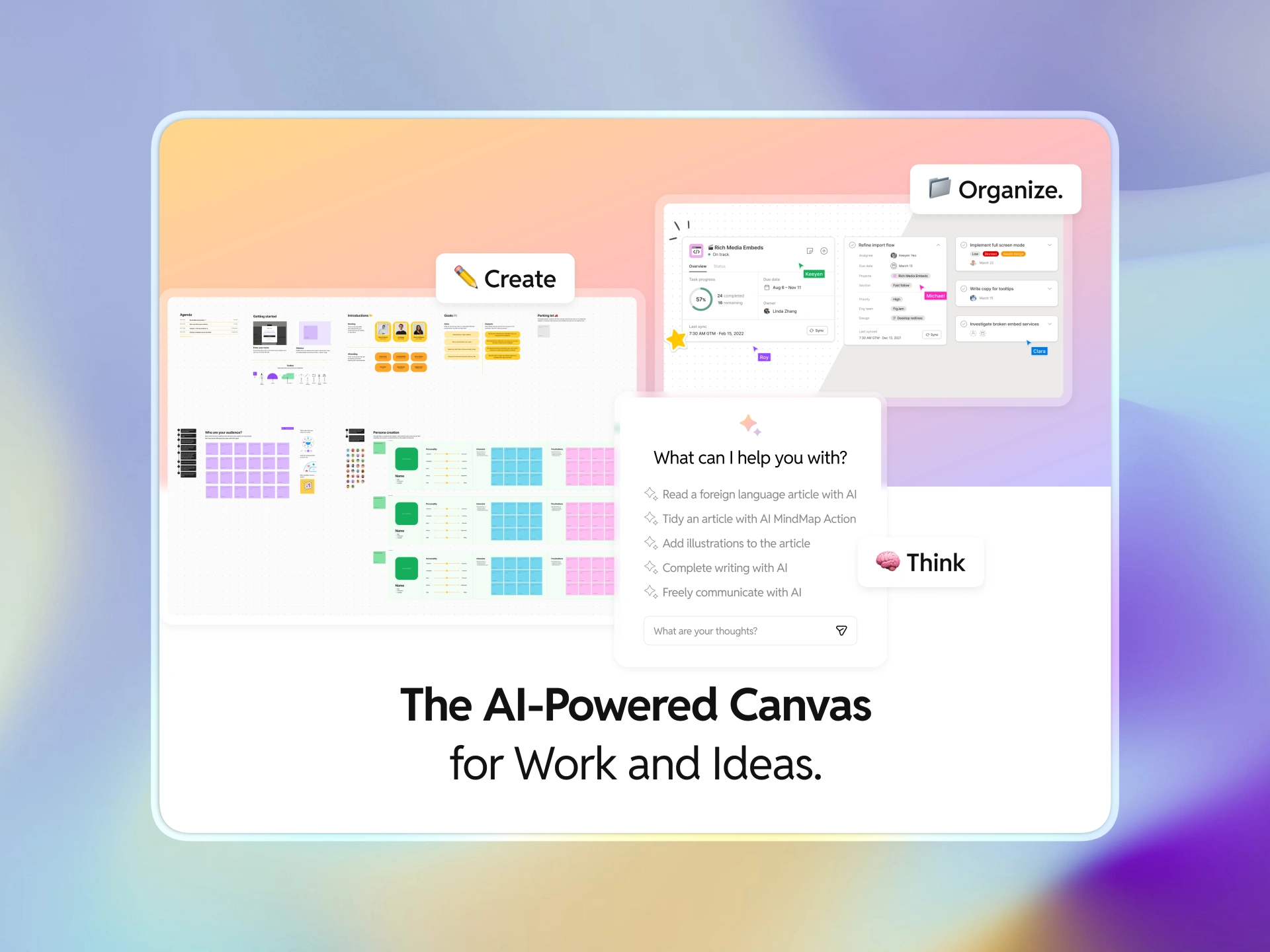
Hive AI
Product marketing deck for YaseenAI's Hive — the AI-powered canvas for work and ideas.

DealerDesk
AI support assistant answering dealer install questions in seconds, trained on manuals and years of real tickets.

TalentLoop
Cloud-native recruitment CRM unifying matching, scheduling, placements, payroll, and invoicing for a US staffing agency.

CareGraph
HIPAA-compliant multi-agent clinical assistant giving clinicians patient data and guideline suggestions inside the EHR workflow.

ThreadMind
Agentic RAG chatbot turning years of scattered Slack logs into a secure, searchable corporate brain for an EdTech company.

FormSense
AI document engine reading patient enrollment forms from any manufacturer, cutting processing time by 90% for a US healthcare tech provider.

HazardLens
AI hazard detection reading camera images from elderly care facilities and flagging risks like water spills with 98% accuracy.

DeskMate
Secure AI support assistant answering employee questions inside Google Workspace, making ticket resolution 70% faster for a US technology enterprise.

OmniSeek
All-in-one AI search engine for a healthtech enterprise, searching SQL data, documents, and images in plain English with 90% better relevance.

ModelForge
Central AI experimentation platform for a US customer service tech company, making prototyping 40% faster and deployment to production 50% faster.

MindHaven
AI chatbot giving 24/7 mental health support for a US wellness startup, reaching 1000+ users in its first few days after launch.

TrackPilot
AI voice assistant letting musicians control their studio software by voice and text. The MVP raised investor interest by 65% for a music production startup.

AccrediFlow
AI layer writing university accreditation narratives from evidence files with every source cited, cutting preparation time by 90% for a US legal service provider.

HangarIQ
AI assistant finding past aircraft maintenance fixes in seconds with cited answers. A pilot saw about 30% fewer recurring actuator issues for a US aviation maintenance company.

HireSignal
AI agent automating job postings, candidate targeting, and ad budgets for a recruitment marketing platform, built with LangChain and RAG on Google Cloud.

ClearRoute
AI strategy engagement turning scattered AI experiments into one prioritized roadmap, with governance and an AI Center of Excellence, for a large US automotive services company.