
HealthcareDocumentAutomation:FormSense
AnAIdocumentengineforaUShealthcaretechnologyproviderwhoseteamwasreadingpatientenrollmentformsbyhand.FormSenseturnsanymanufacturer'sformintoclean,structureddata,cuttingprocessingtimeby90%andtaking65%oftheworkloadofftheoperationsteam.
Business Overview
The client is a US healthcare technology provider running hub services, the support layer that helps patients get access to specialty medications. In that world, every hour of administrative friction is an hour a patient waits for treatment, so shaving time off the enrollment process is the whole mission.
The journey starts when a physician's office submits an enrollment form. The problem: every drug manufacturer and brand uses its own form, with its own layout, labels, and field groupings. There is no universal format. An entire operations team was auditing each format by eye, hunting for the critical fields, and writing custom code to map them into the internal database. Slow, error-prone, and impossible to scale.
When a seasonal spike loomed, the client came to Xpiderz, a long-standing partner, asking for extra hands. We suggested something better than headcount: an AI-driven enrollment form processor. A proof of concept sold the idea, and the same architecture became the foundation of a full document intelligence service, delivered end to end, from AI logic and visual pipeline to a serverless AWS environment with testing and observability built in.
Challenge
Three things made this hard. First, mapping precision: the model could not just guess. It had to link what it sees on a form to a database of hundreds of internal data points, which means understanding layouts, section headings, and specialized medical fields like Prescriber NPI or No Known Allergies in context.
Second, the environment: rendering PDFs accurately on AWS Lambda needed a custom solution, because a garbled or blank image starves the model of the visual context the mapping depends on. And third, the stakes: in healthcare, an extraction error touches patient care and financial records, so the accuracy bar sat far above what a demo would need.
Solution
We took the proof of concept and drove it straight into a production-grade automation engine. FormSense turns unstructured, wildly varied enrollment forms into standardized data maps through a flexible, multi-layer architecture that slots into the client's existing operator dashboards.
The heart of it is a visual processing pipeline that reads a document the way a person does: not as a text dump, but as a page, understanding how text, images, checkboxes, and tables sit relative to each other. That spatial understanding is what lets it navigate forms that traditional text-scraping tools cannot read at all.
Under the hood, FormSense is six working parts:
-
Visual Logic and Contextualization
The pipeline captures high-resolution snapshots of each form and programmatically highlights and indexes every field, handing the AI the full visual hierarchy. That is what lets it read complex medical forms that text scrapers fail on, with fewer data errors and no expensive third-party licensing.
-
Dynamic Prompt Engineering
A custom prompt builder coordinates business logic, user templates, and clinical data rules in real time, so the model walks into every mapping decision already equipped with the right context.
-
Multi-Provider LLM Orchestration
A plug-and-play AI layer lets the client hot-swap between OpenAI, Anthropic, Gemini, and AWS Bedrock with a configuration change, no code rewrite. Production workflows route through Claude on AWS Bedrock, keeping all protected health information inside the client's secure, HIPAA-compliant environment.
-
Infrastructure as Code
The whole system is defined in Terraform, with a custom cloud execution layer and embedded font libraries that stop image distortion, so the AI always gets crisp, perfectly rendered documents under strict security and access controls.
-
Turnkey Deployment Automation
A DevOps suite deploys, scales, or safely tears down the entire cloud infrastructure with a single command, which keeps maintenance overhead low for the client's team.
-
Observability and Debugging
Langfuse integration gives end-to-end visibility into every AI decision for performance tracking and quality grading, while built-in debug modes let engineers inspect parsing and layout logic without firing live AI queries, cutting iteration costs.
Accuracy You Can Audit
In healthcare, precision is not a feature, it is the entry ticket. That is why the project went beyond a working prototype into a full observability ecosystem: every AI decision is traceable, every batch can be graded, and accuracy is something the client's team measures continuously instead of hoping for.
The discipline paid off. Field-mapping precision climbed from 70% in the proof of concept to up to 95% in the production-ready system, a standard the operations team can actually rely on for mission-critical patient data.
Measured Results
The numbers speak
What the automation engine changed for the operations team processing real enrollment forms.
Outcome
The client now runs a fully functional AI form processing service that autonomously converts diverse enrollment forms into structured, actionable data. It is deployed on their testing AWS infrastructure, working through real-world enrollment forms and lightening the operations team's day.
- Days became hours. Form turnaround dropped by 90%, which in this business means patients start treatment sooner.
- Spikes stopped hurting. With 65% of the workload automated, the seasonal crunch no longer means a hiring scramble.
- Accuracy the team trusts. Up to 95% field-mapping precision, with every decision observable and gradable.
Next Steps
The project is in an active refinement phase ahead of final production deployment and UI integration. After a thorough handover, the client's internal .NET team has the code and documentation to scale FormSense independently, and the provider-agnostic AI layer means model upgrades stay a configuration change, not a rebuild.
Drowning in documents nobody wants to read?
Tell us what your team processes by hand. We reply within 48 hours, and everything you share stays confidential.
K2X Auto
Multi-tenant AI voice-calling platform automating seller prospecting for Australian real-estate agencies.
InsightsBot
AI-powered marketing analytics platform that reduced reporting time by 90% and doubled client capacity.
Harbinger AI
Full-spectrum market intelligence platform monitoring competitive signals across six data dimensions.
Sokrateque
AI-powered personal research assistant for Master's and PhD students.
Eona
Conversational AI solution automating customer engagement through WhatsApp in the UAE market.
INPRO AI Legal
AI-powered legal consultation platform democratizing access to affordable legal guidance.
LAWEP
The world's first AI platform for legislative drafting and policy research.
Hive AI
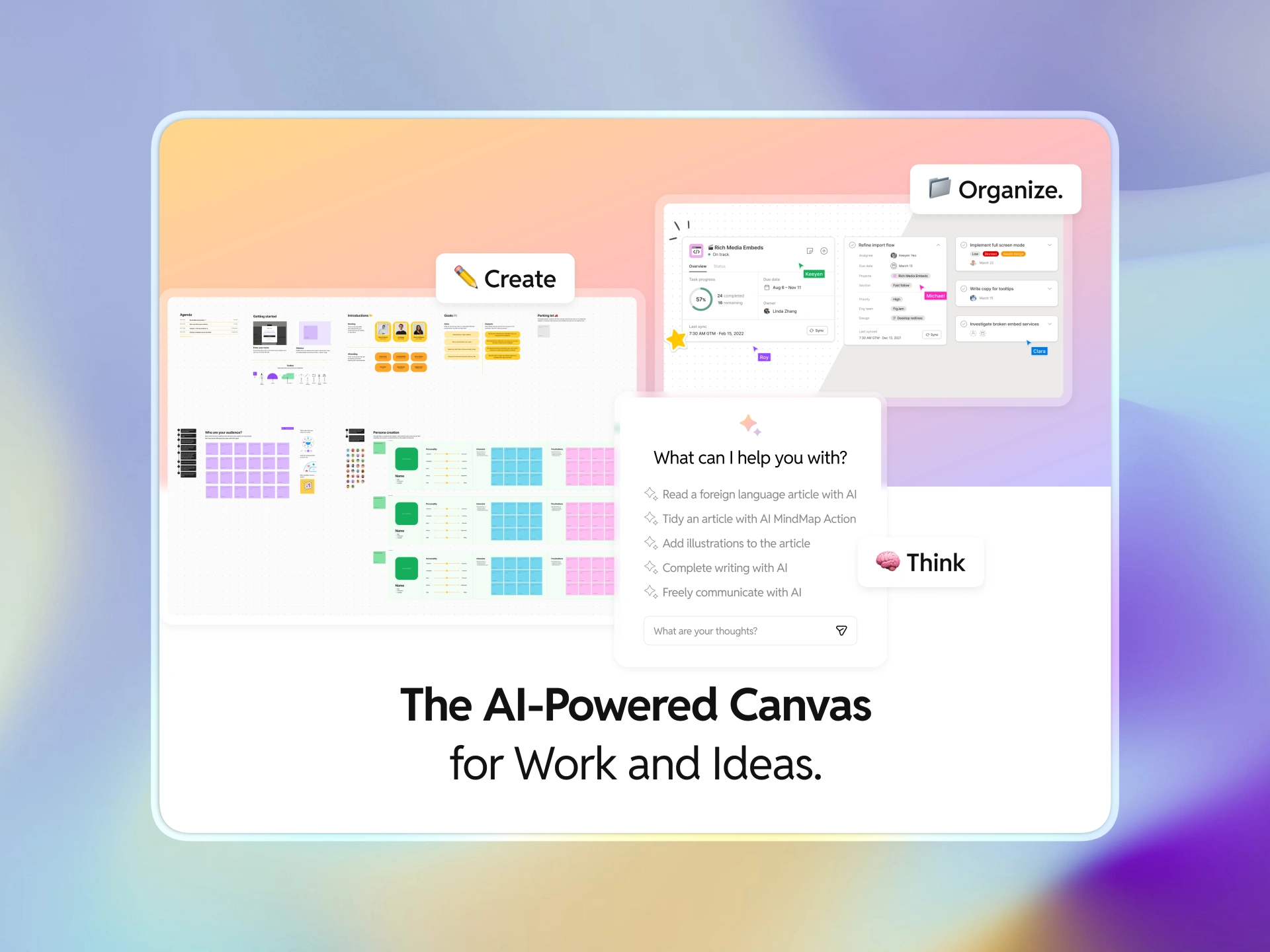
Product marketing deck for YaseenAI's Hive — the AI-powered canvas for work and ideas.

DealerDesk
AI support assistant answering dealer install questions in seconds, trained on manuals and years of real tickets.

TalentLoop
Cloud-native recruitment CRM unifying matching, scheduling, placements, payroll, and invoicing for a US staffing agency.

CareGraph
HIPAA-compliant multi-agent clinical assistant giving clinicians patient data and guideline suggestions inside the EHR workflow.

ThreadMind
Agentic RAG chatbot turning years of scattered Slack logs into a secure, searchable corporate brain for an EdTech company.

HazardLens
AI hazard detection reading camera images from elderly care facilities and flagging risks like water spills with 98% accuracy.

DeskMate
Secure AI support assistant answering employee questions inside Google Workspace, making ticket resolution 70% faster for a US technology enterprise.

OmniSeek
All-in-one AI search engine for a healthtech enterprise, searching SQL data, documents, and images in plain English with 90% better relevance.

ModelForge
Central AI experimentation platform for a US customer service tech company, making prototyping 40% faster and deployment to production 50% faster.