
CustomRAGChatbotforEdTech:ThreadMind
AnagenticRAGchatbotforaUSEdTechcompanywhoseinstitutionalknowledgewasburiedinyearsofSlackthreads.ThreadMindturnsthatscatteredhistoryintoasecure,searchablecorporatebrainthatanswersquestionsinnaturalconversation,entirelyinsidetheclient'sowncloud.
Business Overview
The client is a US-based EdTech company running a medical exam preparation platform with high-fidelity mock exams and learning tools. As the company grew, its critical knowledge ended up scattered across years of unstructured Slack conversations, and employees were spending hours digging through disconnected channels and long threads just to find a past decision.
They wanted an AI assistant that could retrieve accurate historical answers through natural conversation, and after an earlier successful collaboration they came back to Xpiderz to build it from the ground up. The scope covered everything: the system architecture, the data ingestion pipeline, the agentic engine and its API, the interface for internal testing, and the containerized cloud deployment.
Challenge
The brief was tight: a secure agentic RAG chatbot, delivered within two months, running on cost-effective AWS-hosted LLMs so the bill stayed low without the answers getting worse. That combination created three real problems. The lighter models needed advanced prompting to produce reliable results. The Slack history was chaotic and unstructured, and had to become searchable, well-organized knowledge. And the accuracy bar was strict: PII redacted, noise removed, threads restructured, with no hallucinations introduced along the way.
We answered all three with the same move: a multi-stage data transformation pipeline with automated validation built in, so the outputs stay secure, accurate, and production-ready despite the limits of lightweight models.
Solution
A standard single-pass chatbot would not hit the accuracy bar on lightweight models, so we did not build one. ThreadMind runs on a predictable, state-driven agentic architecture where the LLM works as a controlled transformation component inside a highly structured workflow, never as a free-form oracle.
The foundation is a chronological preprocessing pipeline built from scratch to clean and normalize the raw communication data before it ever reaches the model, and an intent-routed query engine on LangGraph and LangChain that picks the right reasoning path for every question.
Under the hood, ThreadMind is six working parts:
-
Noise Reduction and PII Redaction
Slack logs are extracted programmatically and passed through a custom cleaning pipeline that combines deterministic scripts with targeted LLM calls, removing noise and redacting internal credentials through both manual and automated passes.
-
Question-Answer-Summary Normalization
To compensate for the lower reasoning power of smaller models, chaotic chat threads are synthesized iteratively into a highly structured question, answer, and summary format before they go anywhere near storage.
-
Automated Self-Check Validation Loop
A secondary validation pass acts as a built-in quality gate, auditing every generated summary for clarity, factual grounding, and standalone reusability. Weak outputs never make it into the archive, which keeps hallucinations out at the source.
-
S3-Backed Vector Storage
Instead of standing up expensive database infrastructure for a testing phase, we built a custom S3-backed vector bucket in the client's existing AWS account: secure, scalable, and remarkably cheap to run during evaluation.
-
Intent Classification and Routing
Driven by LangGraph and LangChain, the agent analyzes every incoming query and picks the optimal path: a deep RAG search of the archive, a general knowledge response, or a simple conversational reply.
-
Semantic Retrieval
For historical queries, the question is vectorized in real time and the system pulls the top 5 most semantically similar text blocks from the vector bucket. That precise context goes straight into the LLM, so answers stay grounded in verified company decisions.
Private by Design, Cheap by Design
The entire search system runs inside the client's own cloud ecosystem. Company insights and internal discussions never leave it, never touch a public LLM, and stay protected from outside eyes in isolated storage. Privacy here is not a policy, it is the architecture.
The same thinking kept the budget lean. The S3-backed vector store avoids dedicated database costs, the lightweight AWS-hosted models keep inference cheap, and the whole application ships as a container on AWS App Runner behind a clean Gradio chat workspace with high-performance FastAPI endpoints. Easy to test day to day, and ready for simple model upgrades as the technology moves.
Measured Results
The numbers speak
What the proof of concept delivered against a two-month clock and a lean AWS budget.
Outcome
The project did exactly what it set out to do: a high-performing proof of concept that showed the client what internal AI tools can actually deliver for their business.
- Knowledge rot eliminated. Years of unorganized chat logs became an instant, searchable corporate brain, saving employees hours of manual scrolling and preserving institutional memory.
- Rapid time-to-value. Fully functional in under two months from a standing start, so the client could evaluate AI capabilities without waiting.
- High ROI on a lean budget. High answer accuracy with minimal infrastructure spend, and no trade-off on search precision.
- Total privacy. Complete data isolation inside the client's own cloud ecosystem, with sensitive communications protected from public LLM exposure.
Next Steps
On the strength of the proof of concept, the partnership continues. Xpiderz now works with the client as a trusted AI partner on higher-priority, client-facing commercial AI initiatives, with ThreadMind's architecture ready for simple model upgrades as the technology evolves.
Got knowledge locked away in Slack?
Tell us where your team's answers are hiding. We reply within 48 hours, and everything you share stays confidential.
K2X Auto
Multi-tenant AI voice-calling platform automating seller prospecting for Australian real-estate agencies.
InsightsBot
AI-powered marketing analytics platform that reduced reporting time by 90% and doubled client capacity.
Harbinger AI
Full-spectrum market intelligence platform monitoring competitive signals across six data dimensions.
Sokrateque
AI-powered personal research assistant for Master's and PhD students.
Eona
Conversational AI solution automating customer engagement through WhatsApp in the UAE market.
INPRO AI Legal
AI-powered legal consultation platform democratizing access to affordable legal guidance.
LAWEP
The world's first AI platform for legislative drafting and policy research.
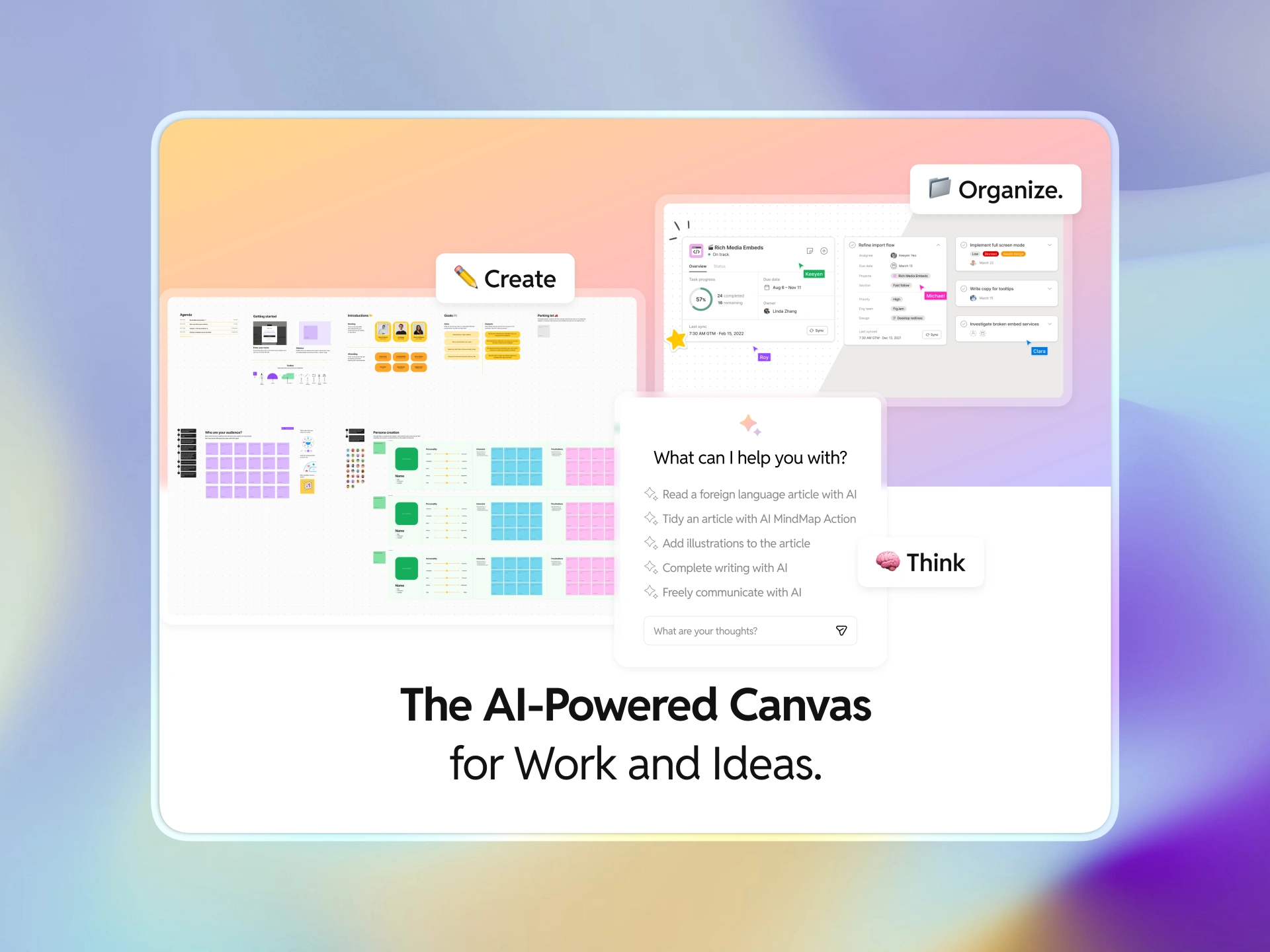
Hive AI
Product marketing deck for YaseenAI's Hive — the AI-powered canvas for work and ideas.

DealerDesk
AI support assistant answering dealer install questions in seconds, trained on manuals and years of real tickets.

TalentLoop
Cloud-native recruitment CRM unifying matching, scheduling, placements, payroll, and invoicing for a US staffing agency.

CareGraph
HIPAA-compliant multi-agent clinical assistant giving clinicians patient data and guideline suggestions inside the EHR workflow.

FormSense
AI document engine reading patient enrollment forms from any manufacturer, cutting processing time by 90% for a US healthcare tech provider.

HazardLens
AI hazard detection reading camera images from elderly care facilities and flagging risks like water spills with 98% accuracy.

DeskMate
Secure AI support assistant answering employee questions inside Google Workspace, making ticket resolution 70% faster for a US technology enterprise.

OmniSeek
All-in-one AI search engine for a healthtech enterprise, searching SQL data, documents, and images in plain English with 90% better relevance.

ModelForge
Central AI experimentation platform for a US customer service tech company, making prototyping 40% faster and deployment to production 50% faster.