Grounded accuracy with RAG development services
Every answer is anchored in retrieved passages from your live knowledge base, so the LLM responds with information that actually exists in your source of truth, not generic web data.
Xpiderz is a senior RAG development company in USA helping enterprises ship production-grade retrieval augmented generation systems, with vector databases, hybrid search, custom retrieval pipelines, and enterprise knowledge bases engineered for grounded accuracy, citations, and measurable business impact.
On their own, AI models have a habit of making things up. They sound sure of themselves while giving a wrong answer, they fall behind the moment your documents change, and they cannot show you where an answer came from.
That is a real problem for banks, hospitals, anything customer-facing, or any job where a wrong answer costs you. RAG fixes this. Instead of guessing, the model reads from your own files first.
Xpiderz builds RAG systems that are ready for real use.
Our RAG development services engineer retrieval, vector storage, and generation pipelines tuned for grounded accuracy, citation quality, and production scale, with every retrieval augmented generation system built to handle real enterprise documents, real query patterns, and real compliance constraints.
We mix a few search methods so the bot finds the right passage every time. It searches by meaning and by exact words, then reorders the results to put the best one first. It can even reshape a messy question so nothing gets missed. The goal is simple: pull the right piece of your content for whatever your users actually ask.
Vector Store Engineering
We set up the search database (on Pinecone, Weaviate, Qdrant, Milvus, or pgvector) so it stays fast as you grow. It is organized, easy to filter, and sized to match how much content you have and how many people use it.
Knowledge Graph Augmentation
We map how things connect, like which product belongs to which policy, or who owns what. That lets the bot reason across your documents, products, people, and rules, not just match words on a page.
Chunking and Indexing Strategy
We break your documents into the right-sized pieces so the bot keeps the full context. We pull out tables and figures, keep the structure intact, and handle PDFs, web pages, and code without losing the thread.
Evaluation and Relevance Tuning
We test the bot all the time against a set of known right answers. We check that it finds the right info, sticks to the facts, does not make things up, and stays on topic. If a score slips, we catch it.
Citation generation, answer grounding checks, confidence scoring, and fallback handling, with every response traceable to its source passage so your team, your customers, and your auditors can verify exactly where each answer came from.
Our streamlined RAG development process is designed for efficiency, moving from discovery to production through six structured stages tuned for grounded accuracy and measurable outcomes.
Why enterprises invest in retrieval augmented generation, and the measurable outcomes Xpiderz delivers across knowledge work, customer support, and regulated decision-making.
Every answer is anchored in retrieved passages from your live knowledge base, so the LLM responds with information that actually exists in your source of truth, not generic web data.
When a policy, product spec, or contract changes, the new content flows through ingestion and is searchable within minutes, no waiting on model retraining cycles.
Retrieval constraints, grounding checks, and confidence thresholds drive measurable reductions in fabricated answers, with hallucination rates typically falling by 60 to 90 percent versus standalone LLMs.
Every response links back to its source document and passage, giving compliance, legal, and audit teams the traceability they need to deploy AI in regulated workflows with confidence.
RAG sidesteps the cost, complexity, and rigidity of repeated fine-tuning, you update the index instead of the weights, which typically reduces total ownership cost by a factor of five to ten.
Your team just updates the documents the way they always do. The bot picks up the changes on its own, so the people who know the content stay in charge and nothing waits on engineering.
At Xpiderz, we take a senior, engineering-first approach to delivering the best RAG AI solutions tailored to enterprise teams and their diverse data, accuracy, and compliance requirements.
We build assistants for banks that answer from the real rules, product terms, and account documents. They help with compliance checks, advisor research, and policy lookups, and every answer shows its source for audits.
For retail, the bot reads your product catalog, sizing guides, and policies. It powers smarter on-site search, helps your merchandising team, and answers after-sale questions using your live product data.
HIPAA-ready assistants that read clinical guidelines, drug references, and provider notes. They give source-backed answers to support care decisions, sort patients by need, and help people find the right care.
The bot reads your process guides, carrier contracts, customs paperwork, and incident logs. Dispatchers and ops teams get instant answers, with sources, on hold-ups, routing, and the rules they have to follow.
For insurance, the bot reads policies, add-ons, claims handbooks, and filings. It helps staff check coverage, support underwriters, and handle claims, with a source on every answer.
The bot reads fare rules, loyalty programs, property details, and travel alerts. It powers booking helpers and guest concierges that give current answers, with the source attached.
The bot reads service manuals, parts catalogs, and warranty rules. It helps dealer service advisors and in-car assistants give solid answers across a lot of complicated vehicle data.
The bot reads listings, building documents, leases, and zoning rules. It helps buyers, tenants, and brokers get answers about a specific property, with the source shown.
The bot reads engineering specs, process guides, maintenance logs, and safety steps. Technicians and engineers get instant, sourced guidance on equipment, defects, and what went wrong.
The bot reads case law, contracts, briefs, and your past work. It helps attorneys with research, due diligence, and finding the right clause, with a source on every answer, ready to check.
The bot reads textbooks, lecture notes, and course plans. It powers tutoring helpers, admissions Q and A, and student-support assistants, all answering from your own materials.
The bot reads your docs, runbooks, release notes, and old content. It powers in-product help, tools that assist your developers, and research tools for writers, across SaaS and media.
Let's scope your RAG project and identify the fastest path from prototype to a cited, production-grade retrieval system.
Schedule a CallMulti-tenant AI voice-calling platform automating seller prospecting for Australian real-estate agencies.
AI-powered marketing analytics platform that reduced reporting time by 90% and doubled client capacity.
Full-spectrum market intelligence platform monitoring competitive signals across six data dimensions.
AI-powered personal research assistant for Master's and PhD students.
Conversational AI solution automating customer engagement through WhatsApp in the UAE market.
AI-powered legal consultation platform democratizing access to affordable legal guidance.
The world's first AI platform for legislative drafting and policy research.
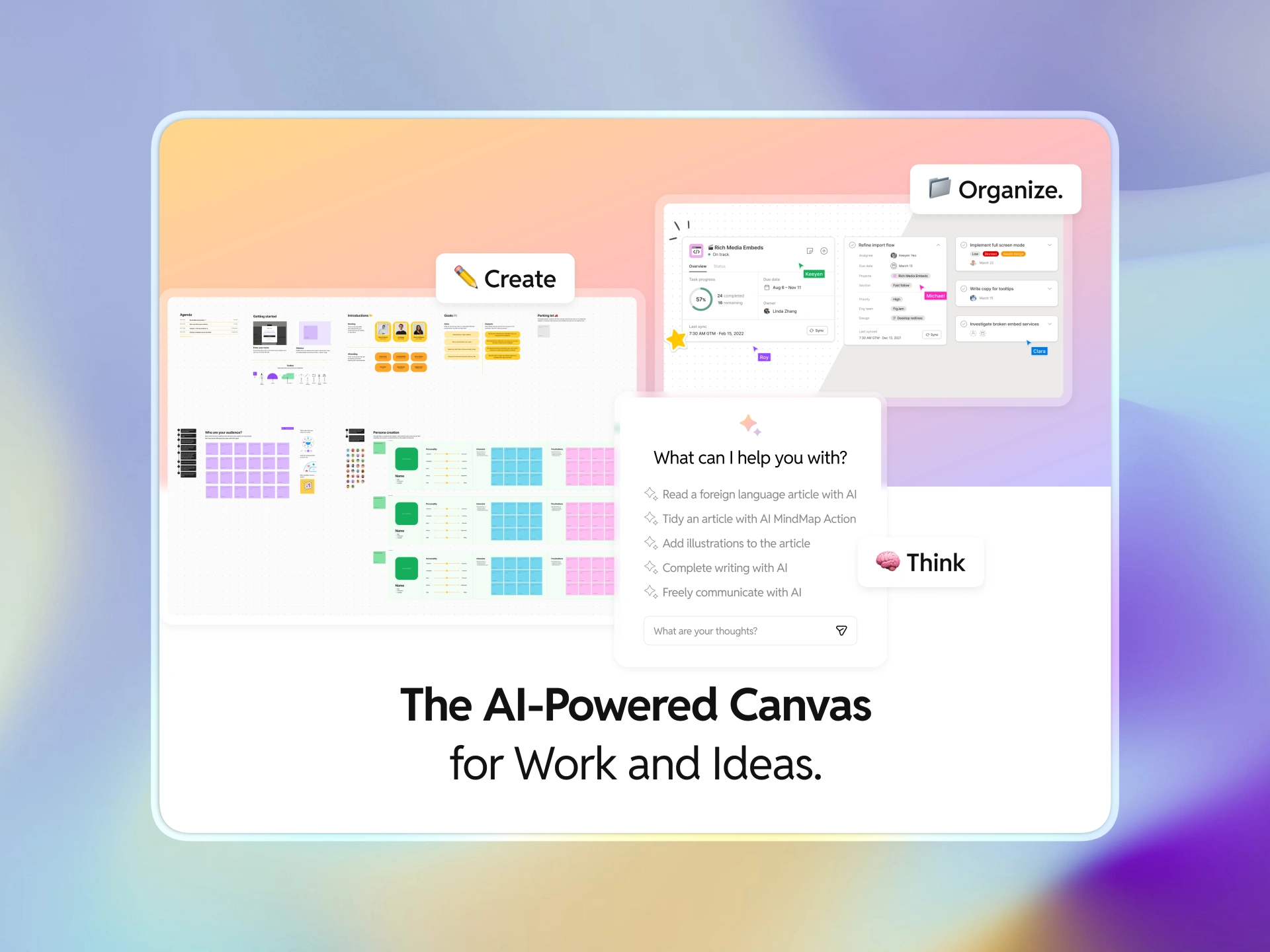
Product marketing deck for YaseenAI's Hive — the AI-powered canvas for work and ideas.

Conversational AI turning 90 years of product testing data into expert-backed shopping recommendations for a US nonprofit.

AI support assistant answering dealer install questions in seconds, trained on manuals and years of real tickets.

Cloud-native recruitment CRM unifying matching, scheduling, placements, payroll, and invoicing for a US staffing agency.

HIPAA-compliant multi-agent clinical assistant giving clinicians patient data and guideline suggestions inside the EHR workflow.

Agentic RAG chatbot turning years of scattered Slack logs into a secure, searchable corporate brain for an EdTech company.

AI document engine reading patient enrollment forms from any manufacturer, cutting processing time by 90% for a US healthcare tech provider.

AI hazard detection reading camera images from elderly care facilities and flagging risks like water spills with 98% accuracy.

Secure AI support assistant answering employee questions inside Google Workspace, making ticket resolution 70% faster for a US technology enterprise.

All-in-one AI search engine for a healthtech enterprise, searching SQL data, documents, and images in plain English with 90% better relevance.
Central AI experimentation platform for a US customer service tech company, making prototyping 40% faster and deployment to production 50% faster.

AI chatbot giving 24/7 mental health support for a US wellness startup, reaching 1000+ users in its first few days after launch.

AI voice assistant letting musicians control their studio software by voice and text. The MVP raised investor interest by 65% for a music production startup.

AI layer writing university accreditation narratives from evidence files with every source cited, cutting preparation time by 90% for a US legal service provider.

Machine learning underwriting system predicting resale value, rehab cost, and time to sell inside Salesforce, with 31% lower ARV error for a US real estate investor.

AI assistant finding past aircraft maintenance fixes in seconds with cited answers. A pilot saw about 30% fewer recurring actuator issues for a US aviation maintenance company.

AI agent automating job postings, candidate targeting, and ad budgets for a recruitment marketing platform, built with LangChain and RAG on Google Cloud.

AI strategy engagement turning scattered AI experiments into one prioritized roadmap, with governance and an AI Center of Excellence, for a large US automotive services company.
Clear answers on scope, cost, compliance, and how production-grade RAG development services actually work.
RAG stands for Retrieval Augmented Generation. In plain terms, the AI looks things up in your own content before it answers. It pulls the relevant bits from your documents and data, then writes the answer from those, instead of guessing from what it picked up in training. So the answer is accurate and you can see where it came from.
RAG in an LLM means you pair a large language model (the AI that writes the answer) with a search step. Before it replies, the search step grabs the most relevant pieces from your data and hands them to the model. The result is an answer grounded in your content that can show its source and stay up to date.
Retrieval Augmented Generation is an AI setup with two parts: one that finds and one that writes. The finder pulls the right pieces from your own data, and the writer, usually a large language model, turns those into an answer. Because the answer is built from real documents, it does not make things up.
RAG development services cover the whole build, start to finish. We take in your documents, break them into pieces, set up the search, connect the AI model, write the prompts, test the answers, and put it live across your website, app, and internal tools.
You get senior engineers, setups that are not tied to one vendor, and RAG systems we have already run in the real world for strict industries. You own the code, the prompts, and the data, with no lock-in. And from day one you can see how well it finds the right info, sticks to the facts, and cites its sources.
A RAG LLM solution is a working app that joins a large language model with a search layer over your data. It reads in your documents, stores them so they are easy to search, finds the most relevant pieces when someone asks, and uses the model to write an accurate, cited answer.
Yes, we build each RAG system around your data, your rules, and the way your team works. The search, the model, the storage, the prompts, and the testing are all shaped to fit what you need for accuracy, speed, and security.
Yes, we can run the whole RAG system on your own cloud or your own servers. Your data stays with you, you hold the keys, and we can fully seal it off from the internet for healthcare, finance, defense, and other strict work.
RAG works in three steps. First, we break your documents into pieces and store them so they are easy to search. Second, when someone asks a question, the system finds the most relevant pieces. Third, the AI model uses those pieces to write a clear, cited answer.
It stops the AI from making things up, keeps answers current with your latest data, and shows a source for each answer, which matters for compliance. It also costs less than retraining a model, and you can switch to a better AI model later without starting over. It is the fastest way to put AI you can trust in front of customers, staff, and regulators.
It makes the chatbot answer from your checked content instead of whatever it learned in training. The bot finds the right passages when asked, cites them in the answer, and avoids making up facts on tricky or niche questions. So the answers stay accurate.
Yes, it connects to the tools you already use, like Confluence, Notion, SharePoint, Salesforce, HubSpot, Zendesk, ServiceNow, your data warehouse, S3, and custom databases. It links up through secure connections, and your single sign-on, access rules, and audit logs stay in place.
Banking, healthcare, legal, insurance, manufacturing, retail, education, real estate, logistics, and SaaS all use it. They use it for support assistants, internal knowledge search, compliance help, and customer-facing search, each one tuned to the data and rules of that industry.
We use AI models from OpenAI, Anthropic, Google, Mistral, and Llama, search databases like Pinecone, Weaviate, Qdrant, Milvus, and pgvector, keyword search through Elastic and OpenSearch, and tools like LangChain and LlamaIndex to tie it all together. We pick what fits the job.
Usually 3 to 5 weeks for a working prototype, and about a quarter to get the full thing live. You get a demo every week, and we lock in a real go-live date while we are still planning.
It fixes the two things that stop companies from trusting AI: making things up, and falling out of date. Because every answer comes from your live data and shows its source, RAG makes AI safe and accurate enough for strict, customer-facing, and decision-making work.